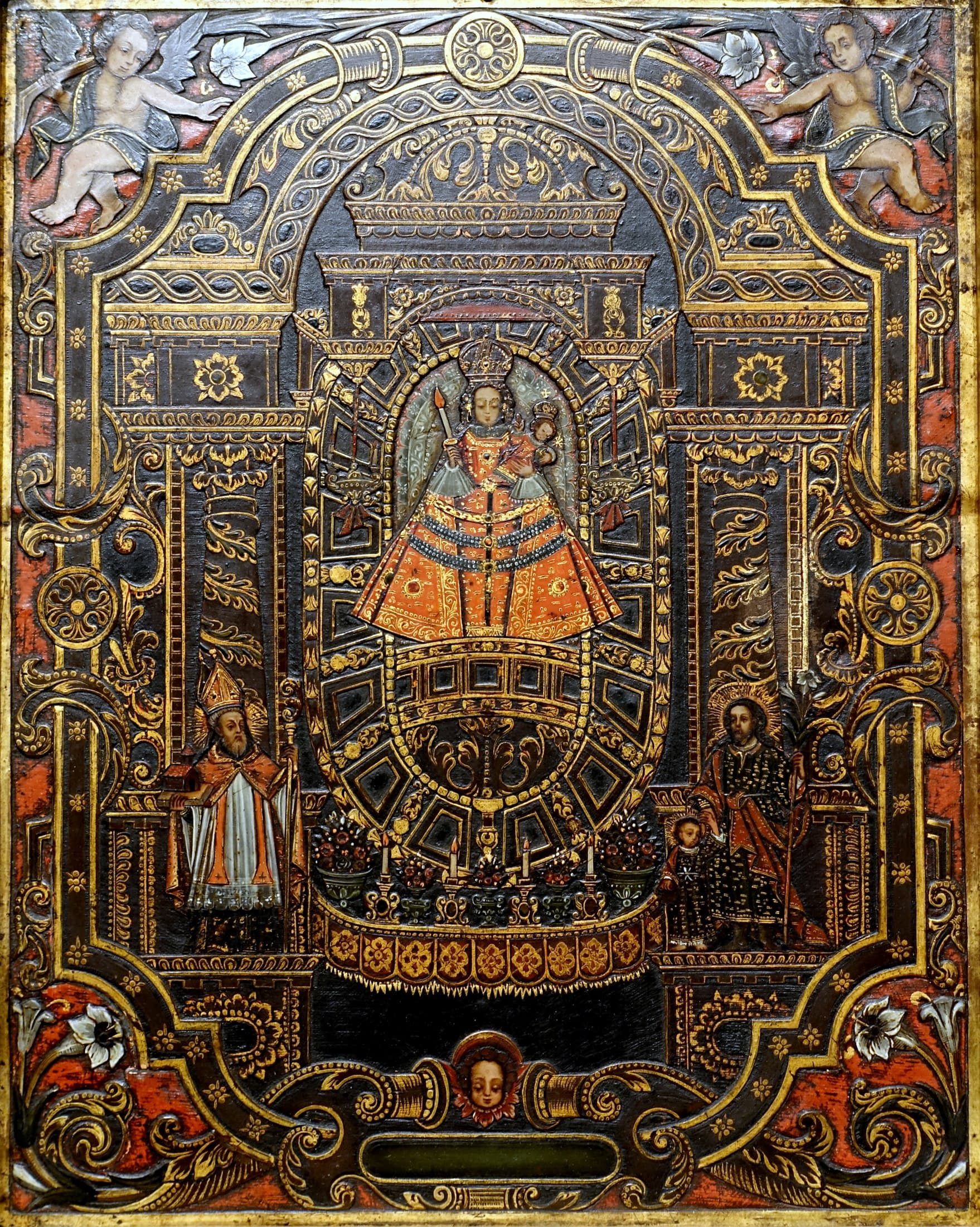
Our Lady of Copacabana
The Virgin of Lake Titicaca's shrine — the pilgrimage Mary that gave a Brazilian beach its name.
- Work
- Oil on incised copper plate
- Artist / creator
- Anonymous Bolivian painter
- Origin & date
- Bolivia, 18th century
- Held by
- Blanton Museum of Art, The University of Texas at Austin, via Wikimedia Commons (public domain)
Format
The full-resolution scan — yours to print, study, and keep.
Size
$24.00
The story
Our Lady of Copacabana is the founding image of Andean Marian devotion — carved in 1583 by the Inca sculptor Francisco Tito Yupanqui for a shrine on the shore of Lake Titicaca, and copied in paint across the viceroyalty ever after. This copy is worked in oil on an incised copper plate rather than canvas, a format colonial workshops favored for smaller devotional objects meant to travel.
The shrine gave her name to a beach on the other side of the continent, in Rio de Janeiro — Portuguese sailors passing through Spanish Peru carried her cult east, and it stuck.
A small, portable object carrying an outsized amount of history in it.
About this reproduction
- • Faithful reproduction of a public-domain work, sourced from Blanton Museum of Art, The University of Texas at Austin, via Wikimedia Commons (public domain)’s open-access release.
- • Printed to order on EMA matte art paper, 200gsm. The heirloom frame is gold, under acrylic, with no mount.
- • Color-managed to the source scan.
- • Ships in 5–9 business days; satisfaction guarantee.
From the same collection
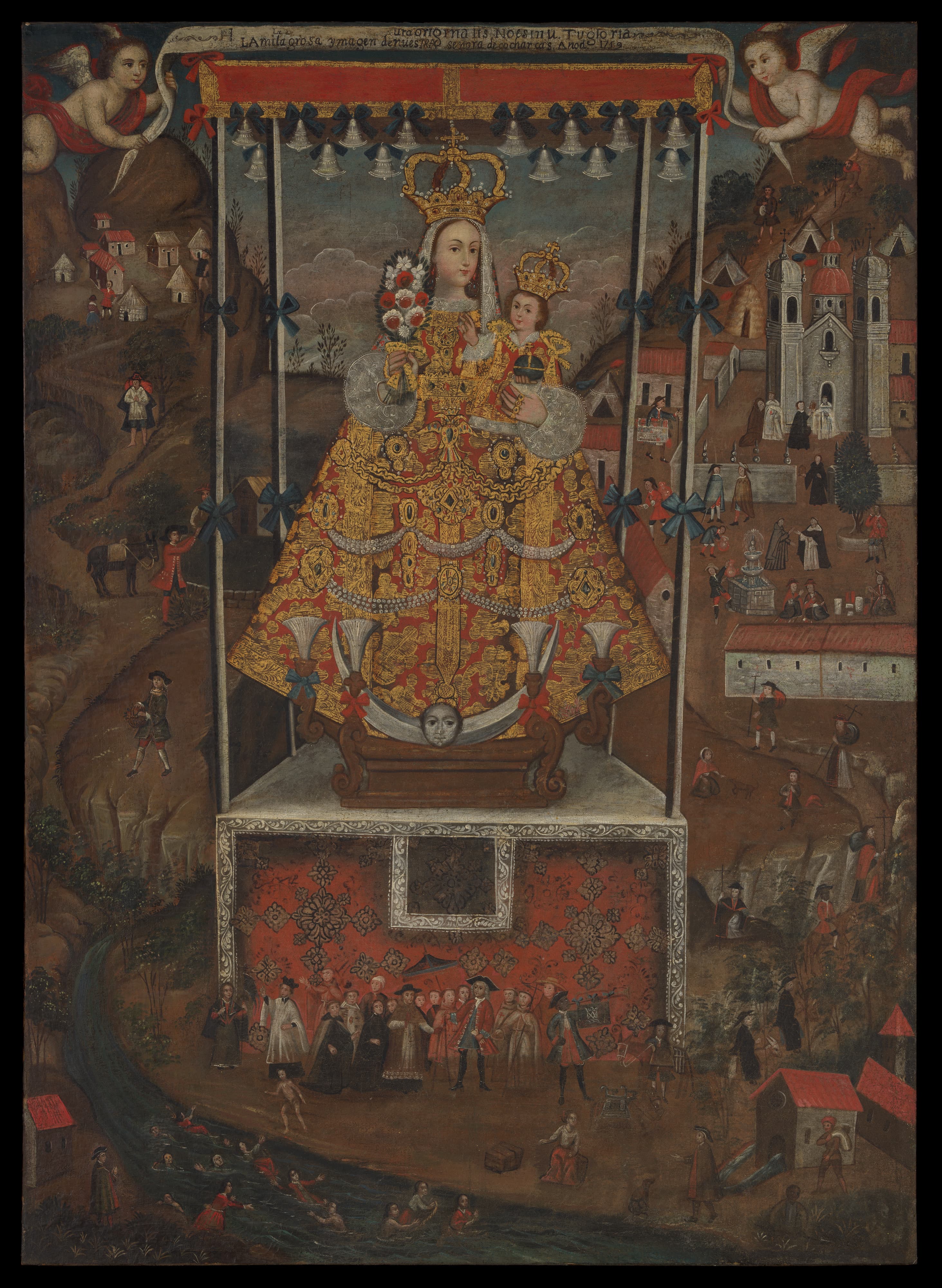
Our Lady of Cocharcas
The Virgin of a Peruvian mountain shrine, built up in real gold leaf.
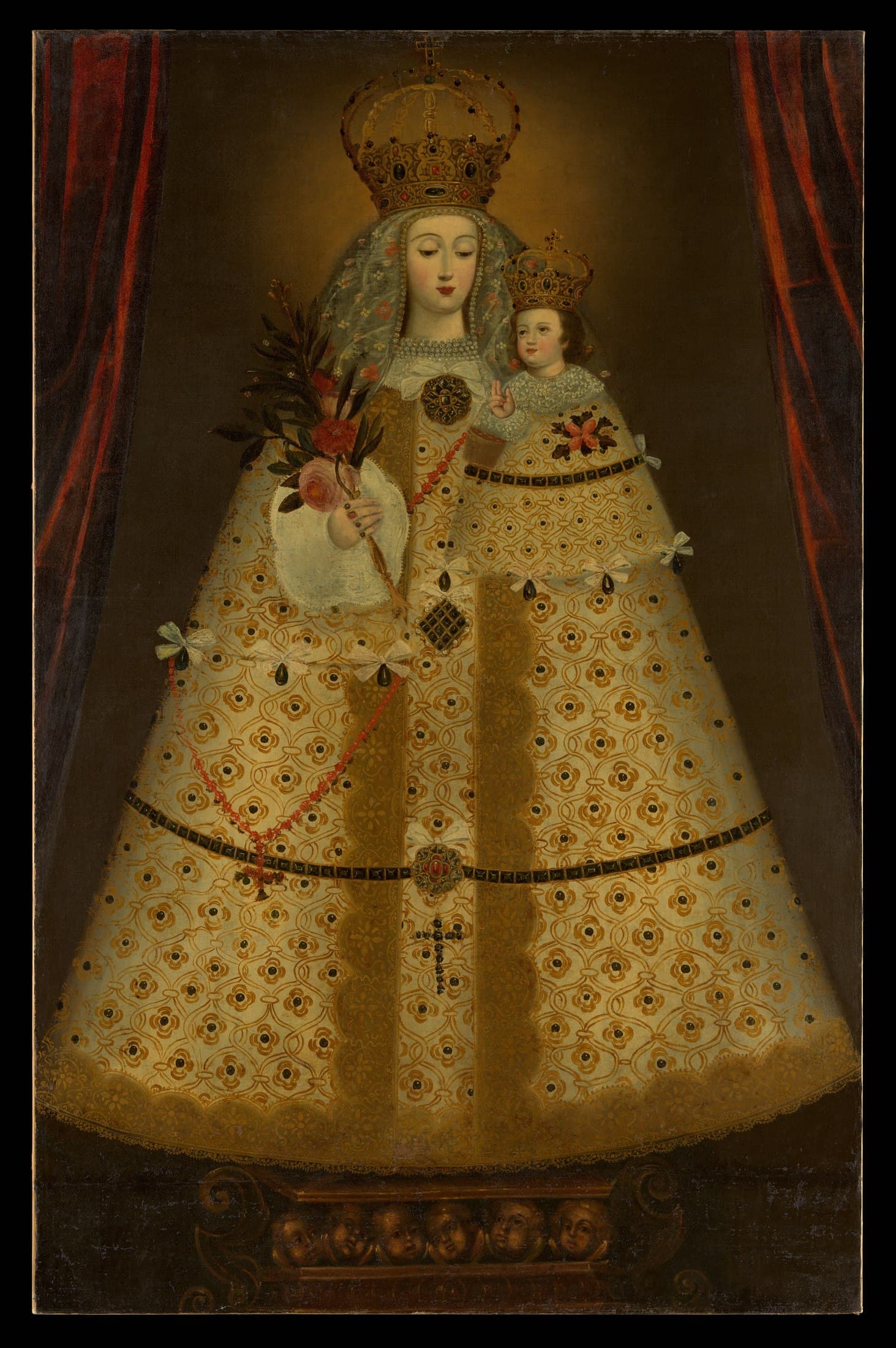
Our Lady of Guápulo
A pilgrimage Virgin from the hills above Quito, painted in full Cusco gold.
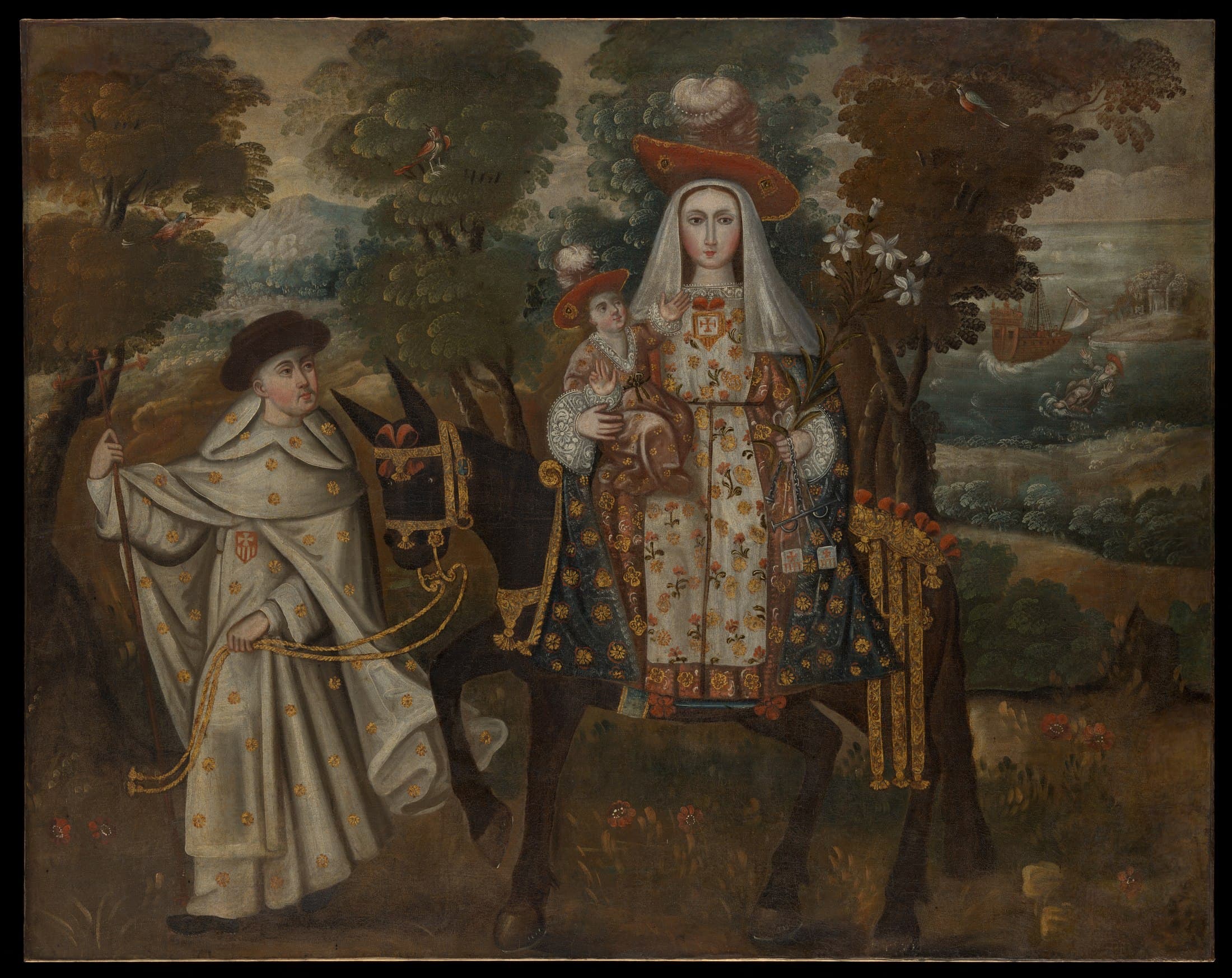
Our Lady of Mercy, called "The Pilgrim of Quito"
The Virgin as an actual traveler — staff, cloak, and the road still in her feet.