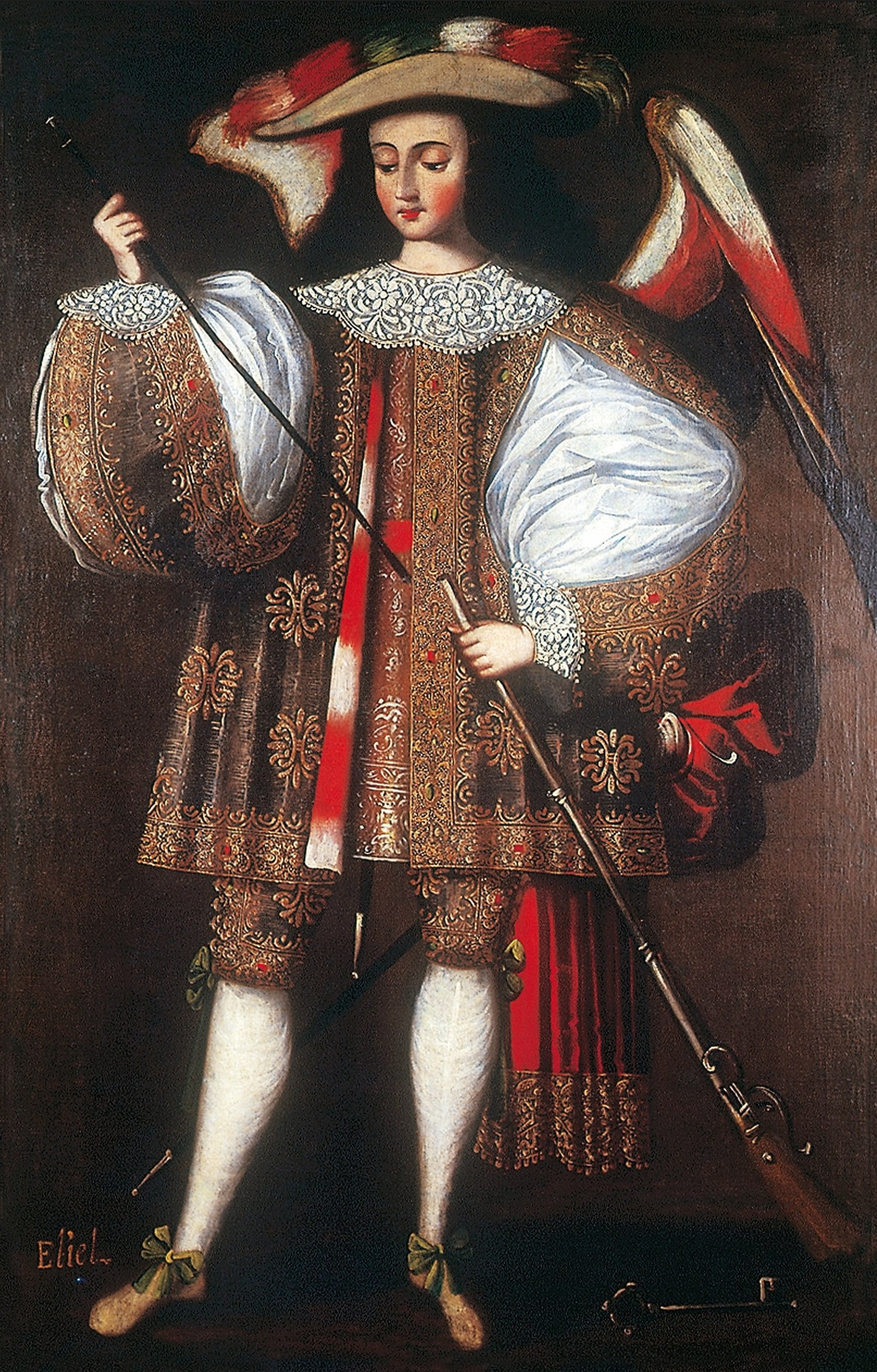
Heaven, armed and in lace
The Arquebusier Angels
Archangels painted as 17th-century Spanish nobles — plumed hats, lace collars, silk breeches — and carrying not swords but arquebuses, the matchlock guns of the Habsburg infantry. A wholly Andean invention: no European painting shows an angel with a gun. Cusco workshops built entire named militias of them, drawn from apocryphal angel lists that named far more than the four archangels of scripture.
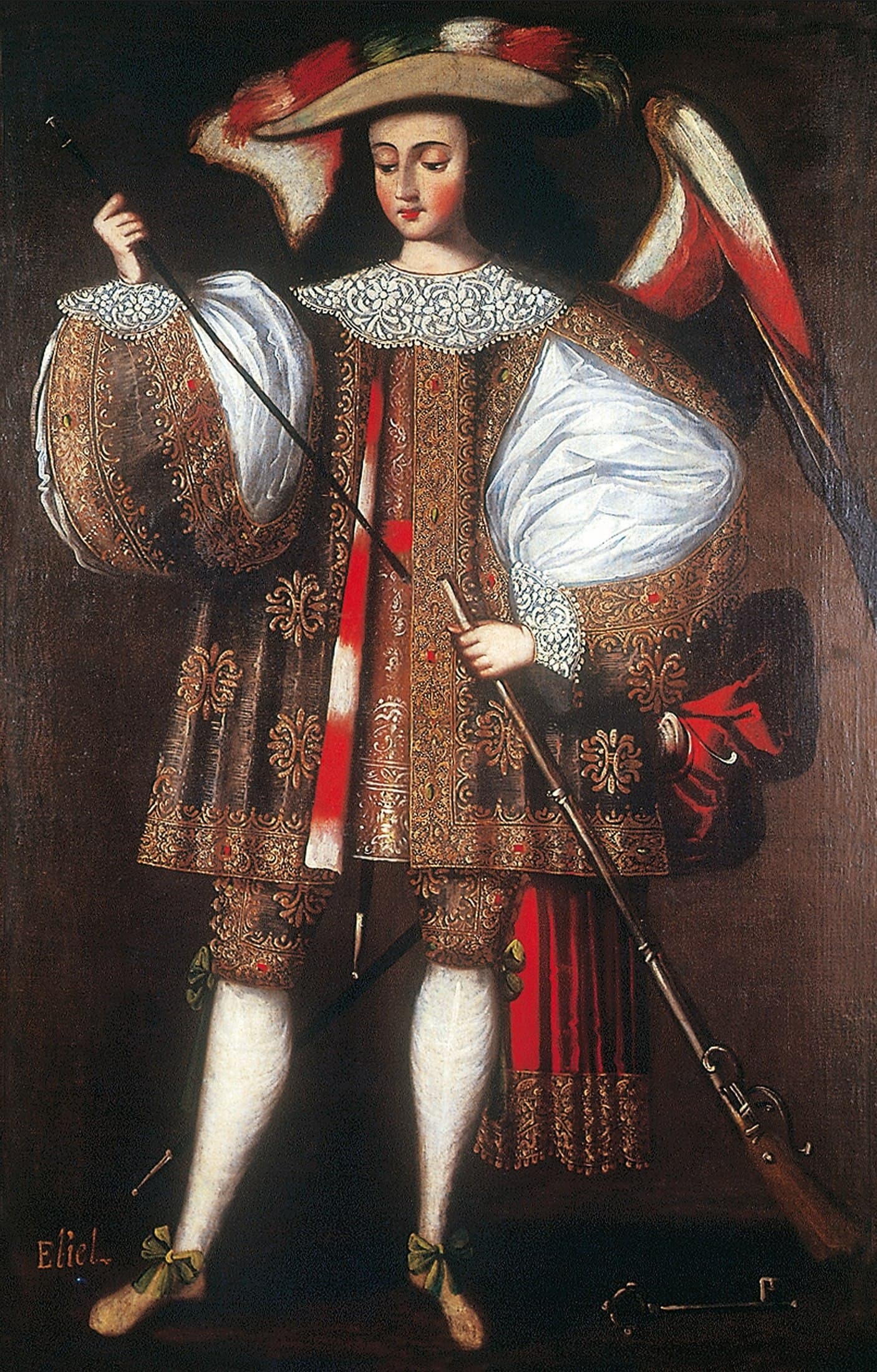
Archangel Eliel with Harquebus
A noble in plumed hat and lace collar, musket shouldered like a courtier's cane.
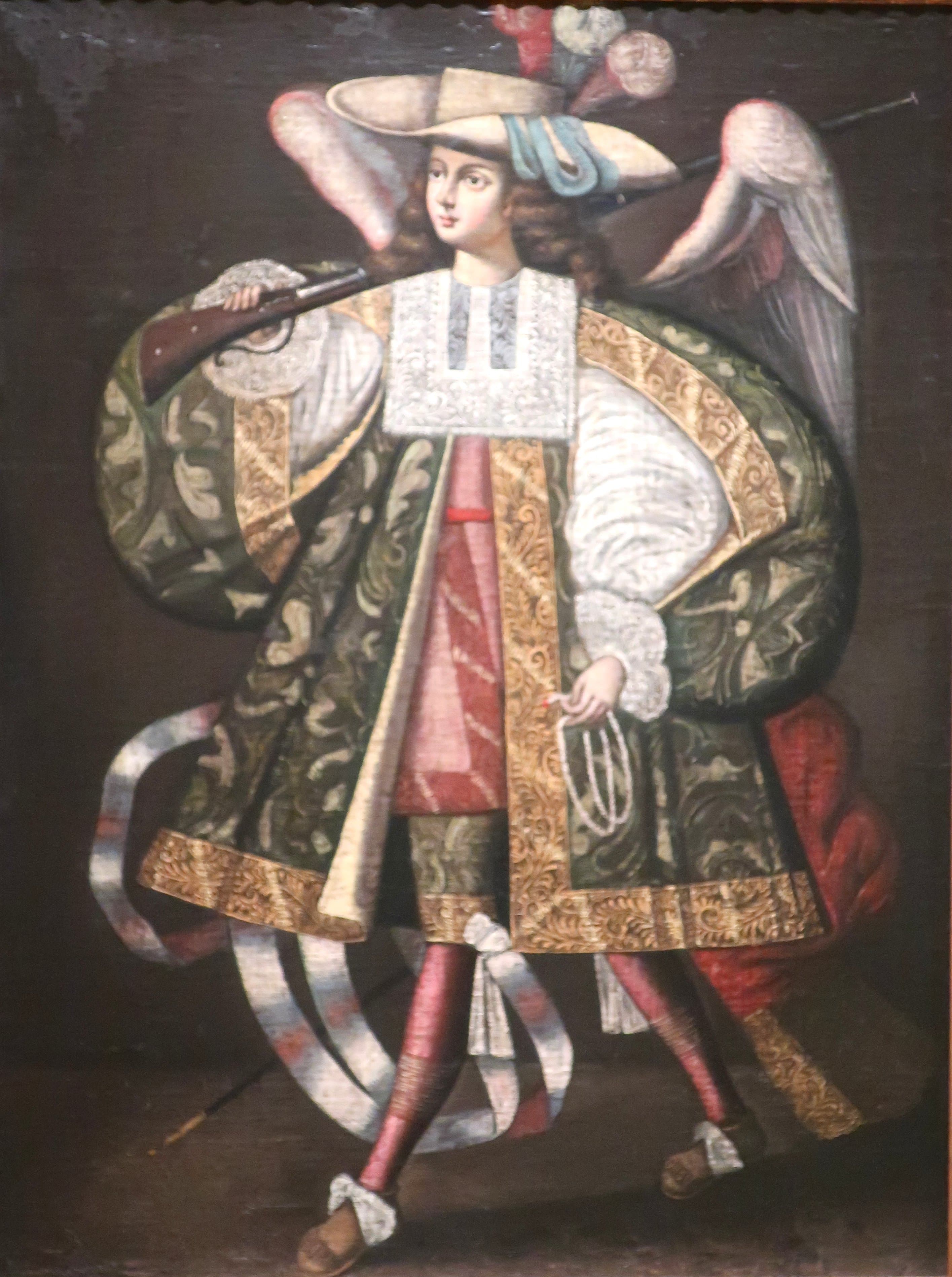
The Archangel Salamiel with a Musket
Winged, armed, and dressed for a viceroy's court — the militia of heaven, Andean-style.
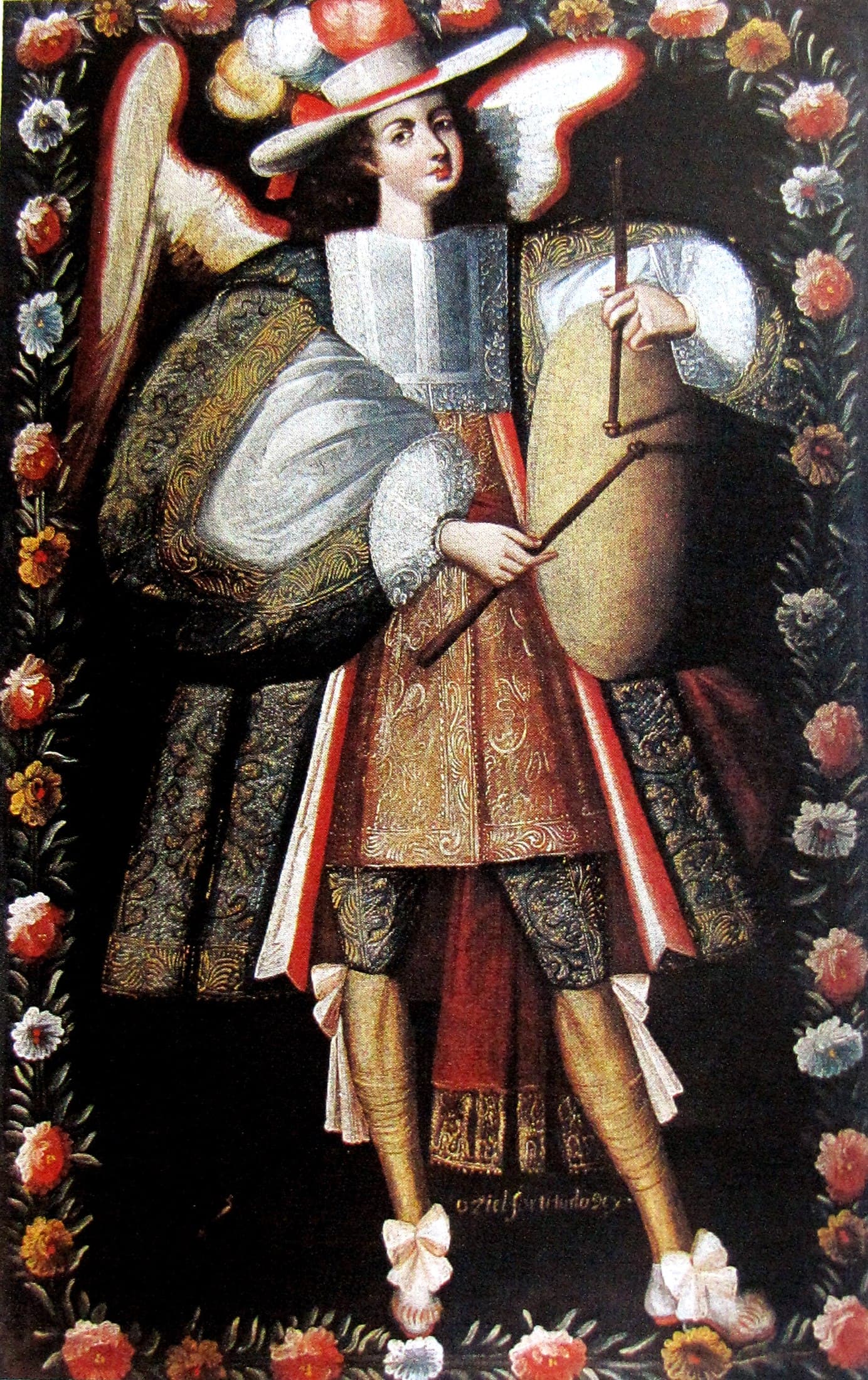
Archangel Josiel
From the angel-wall of Uquía, high in the Argentine Andes — the militia's southern outpost.
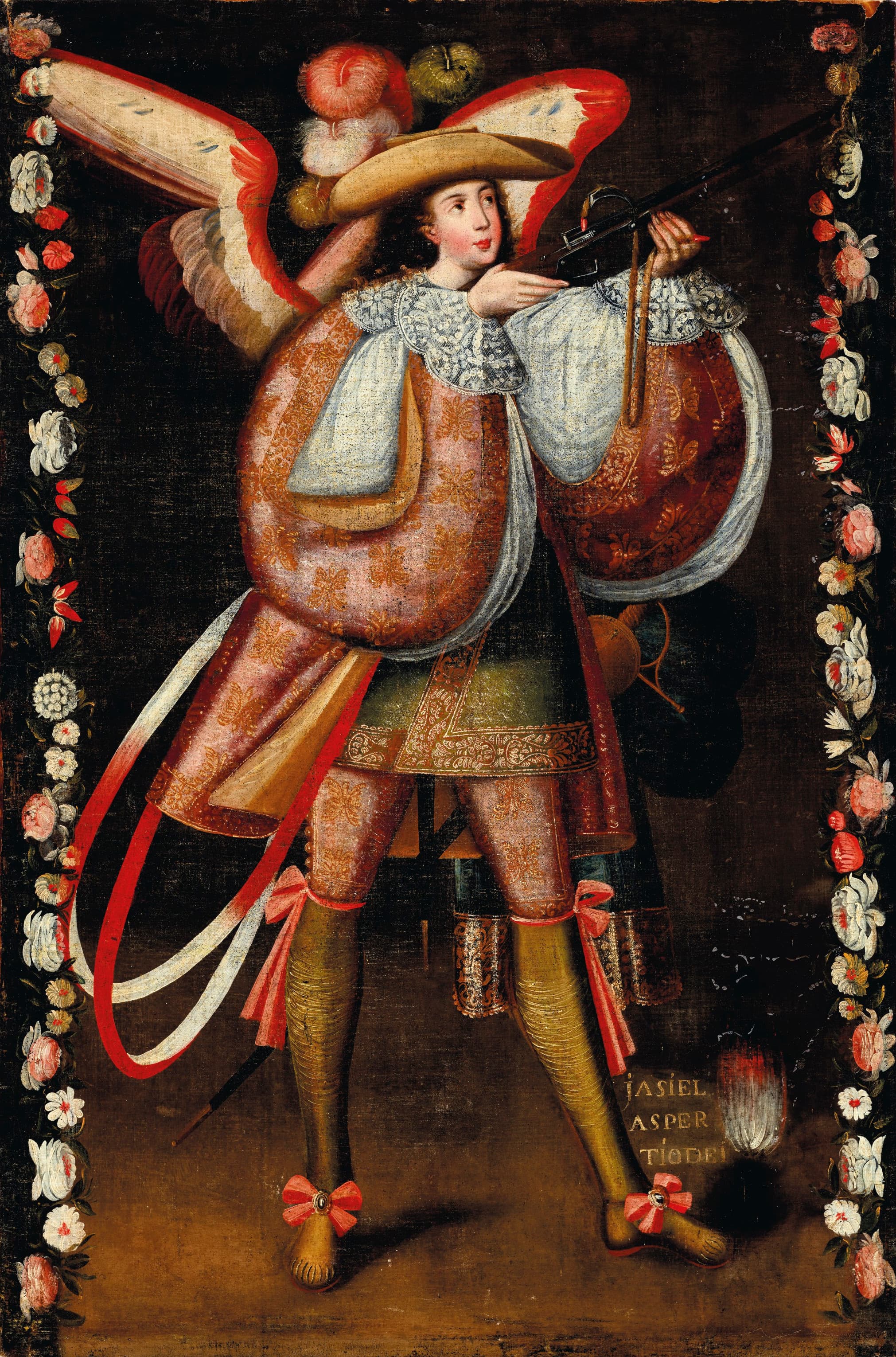
Archangel Asiel, Timor Dei
"The Fear of God" — one of the militia's most reproduced names, now sourced.
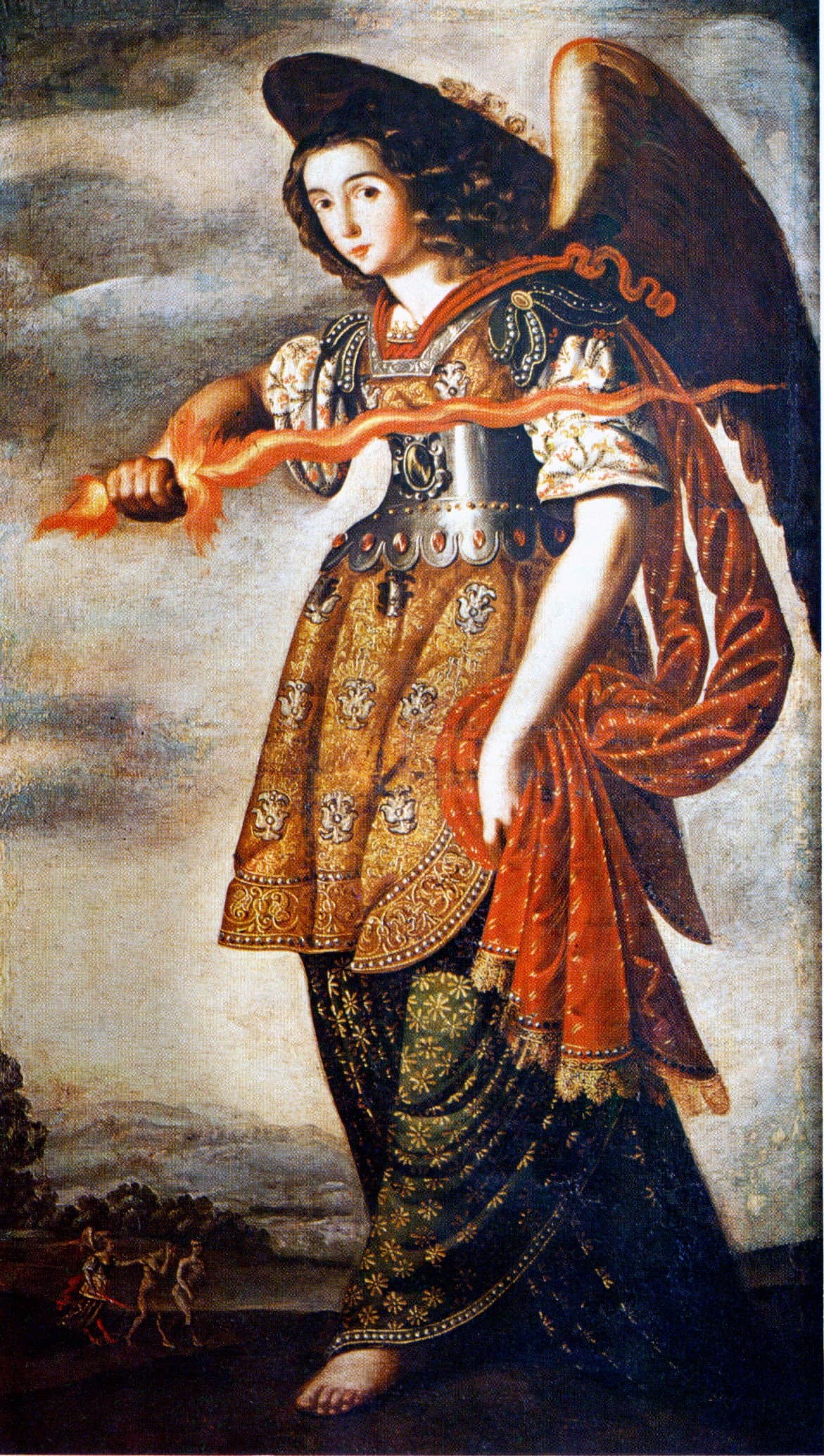
Uriel, Arquebusier
One of the four canonical archangels, dressed for the same militia as his invented siblings.
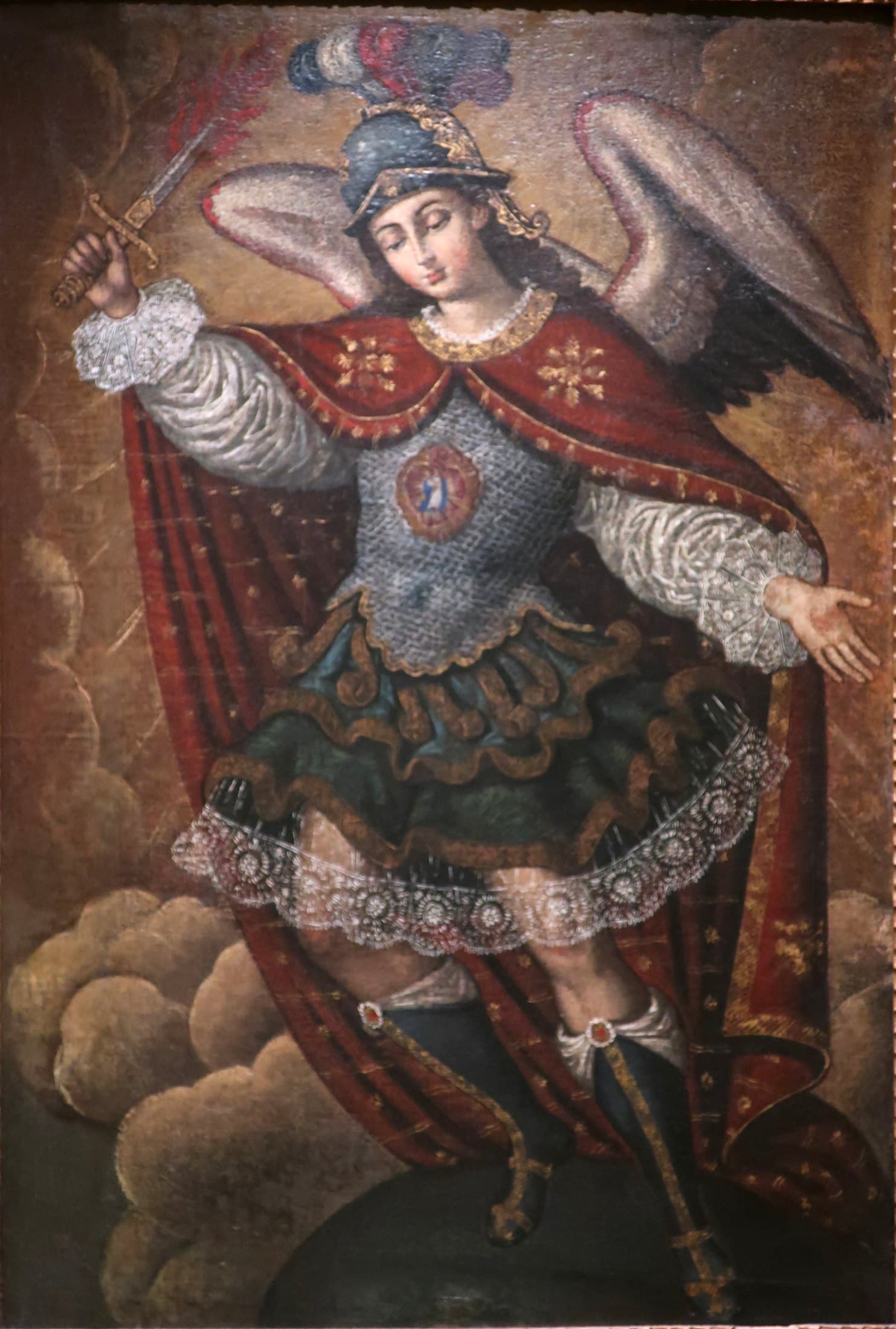
The Archangel Jophiel
A less common militia name — "the Beauty of God" — in the same plumed-and-armed dress.
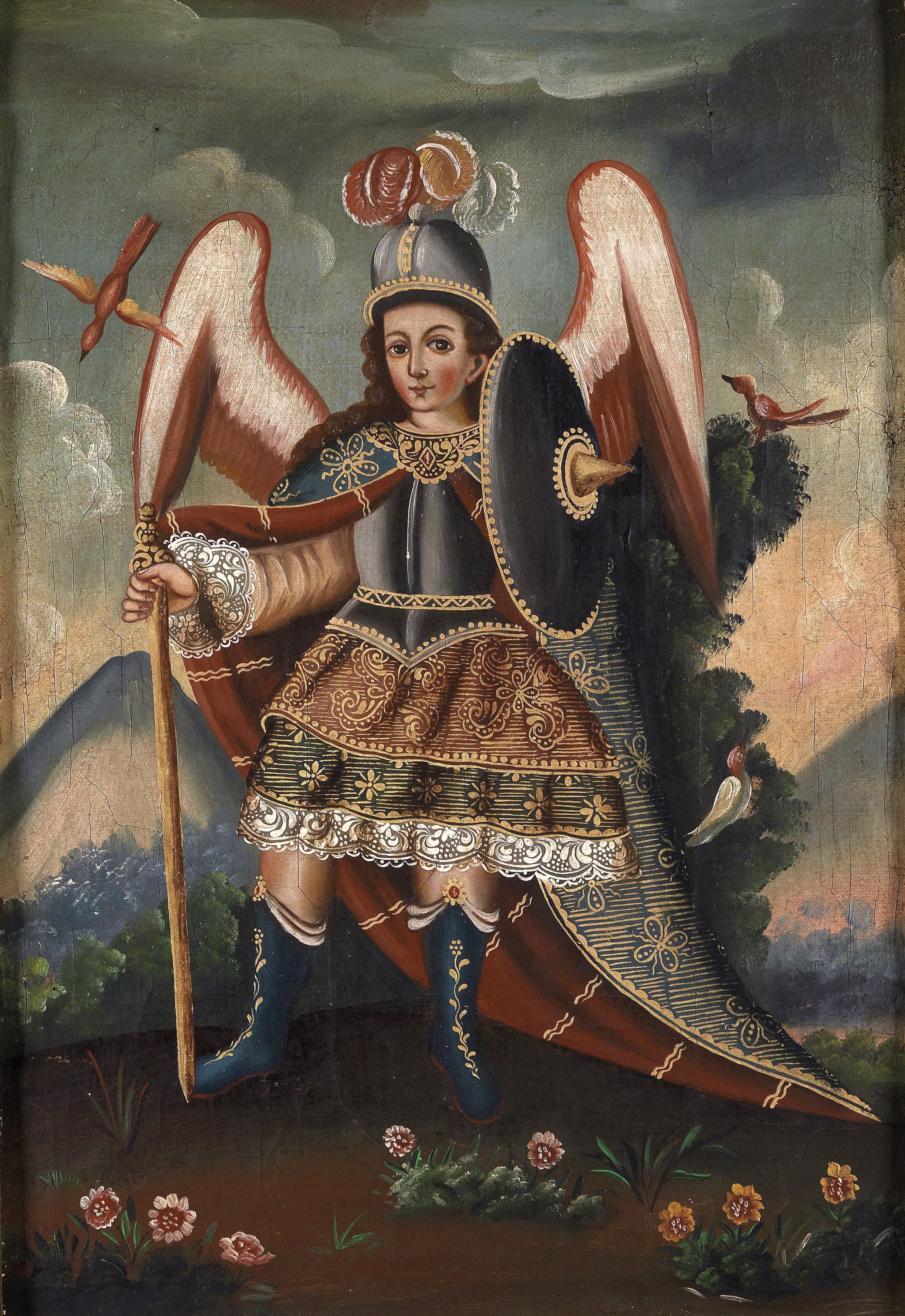
Archangel Raphael
The archangel of healing and travel, folded into the same militia visual language.
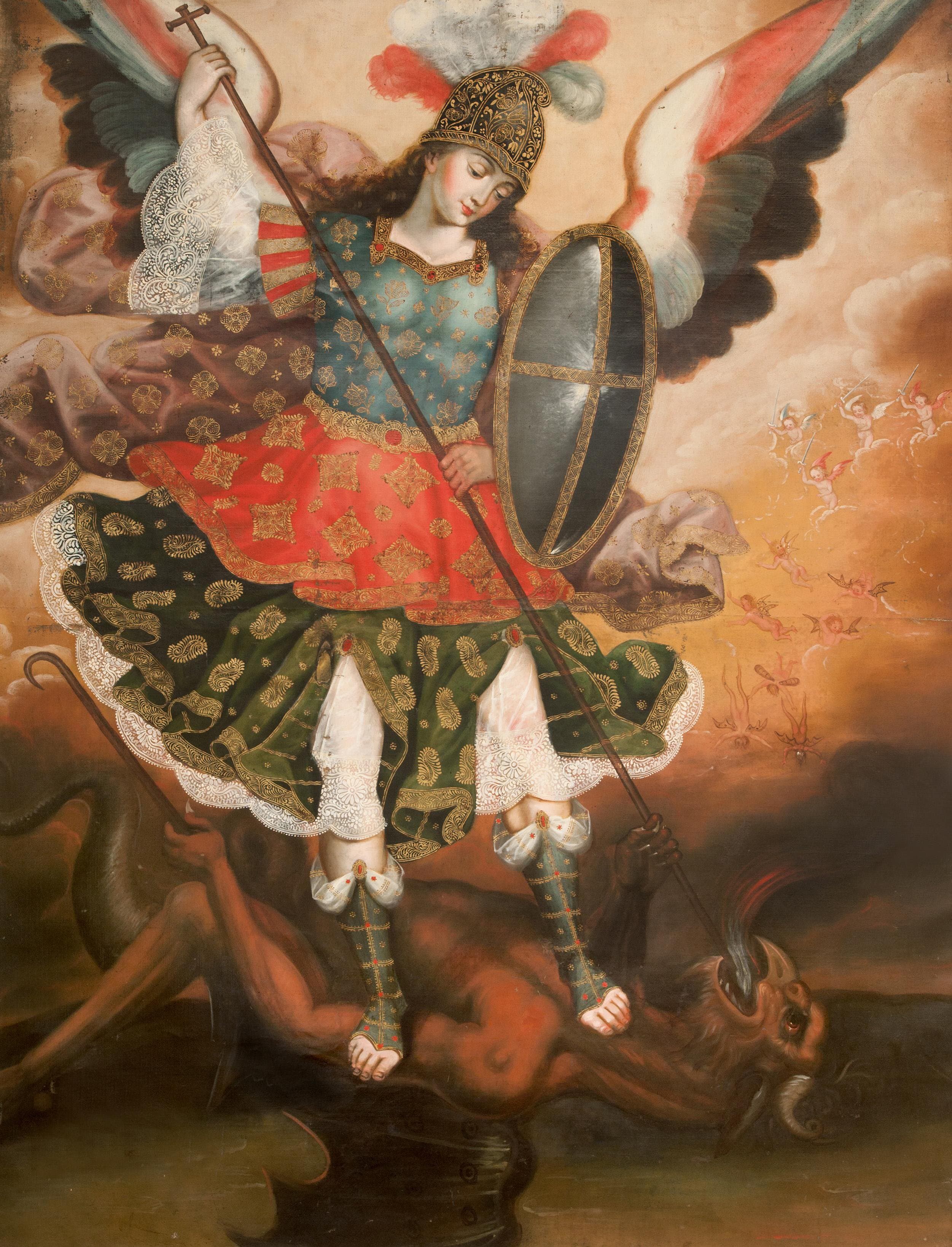
Saint Michael the Archangel
Heaven's field marshal, painted in the same courtier-and-arquebus grammar as his militia.

Angel Arcabucero
A later, 19th-century echo of the militia format — the tradition still being painted generations on.
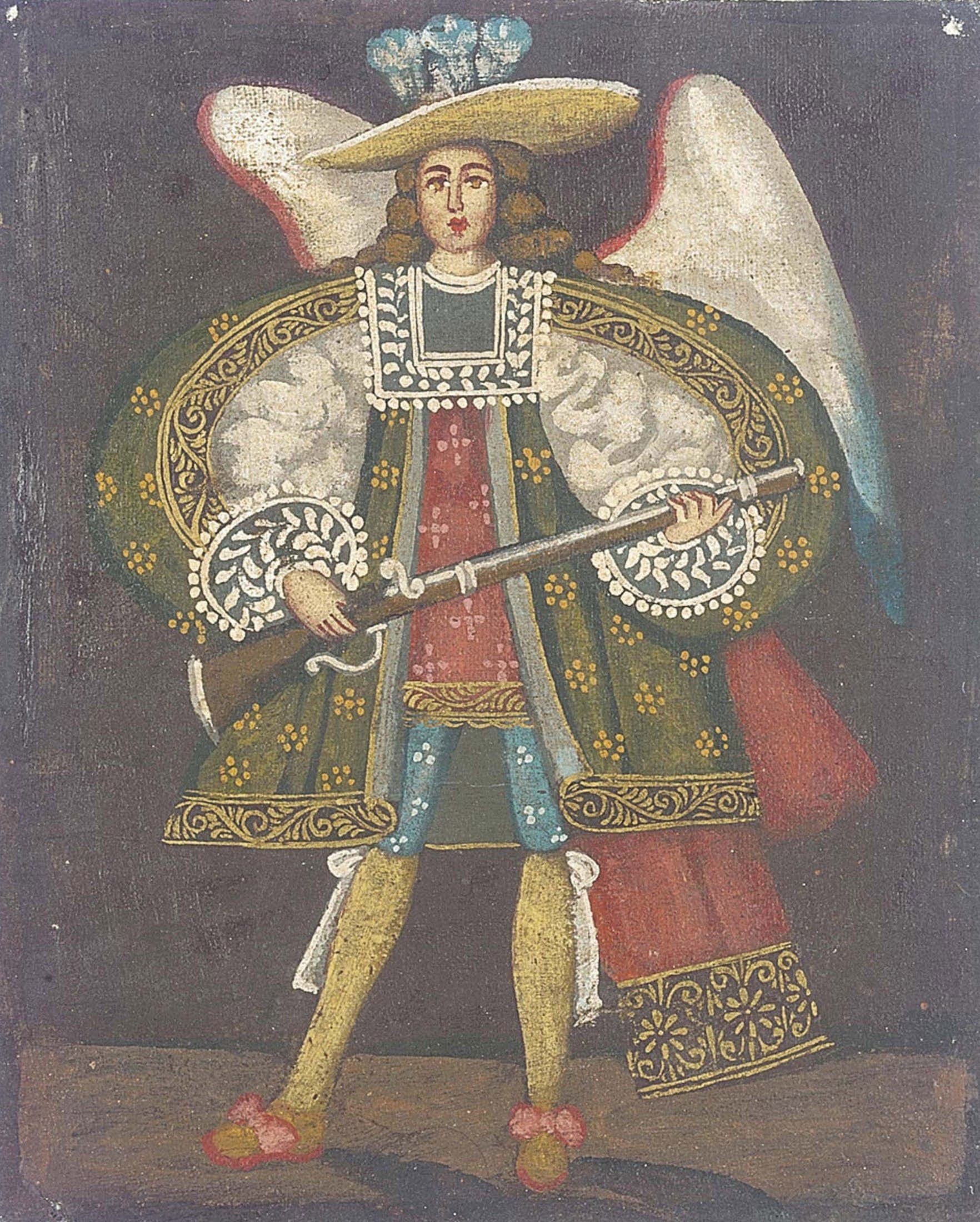
Angel Arcabucero
An unnamed member of the militia — the format survives even where the angel's name doesn't.
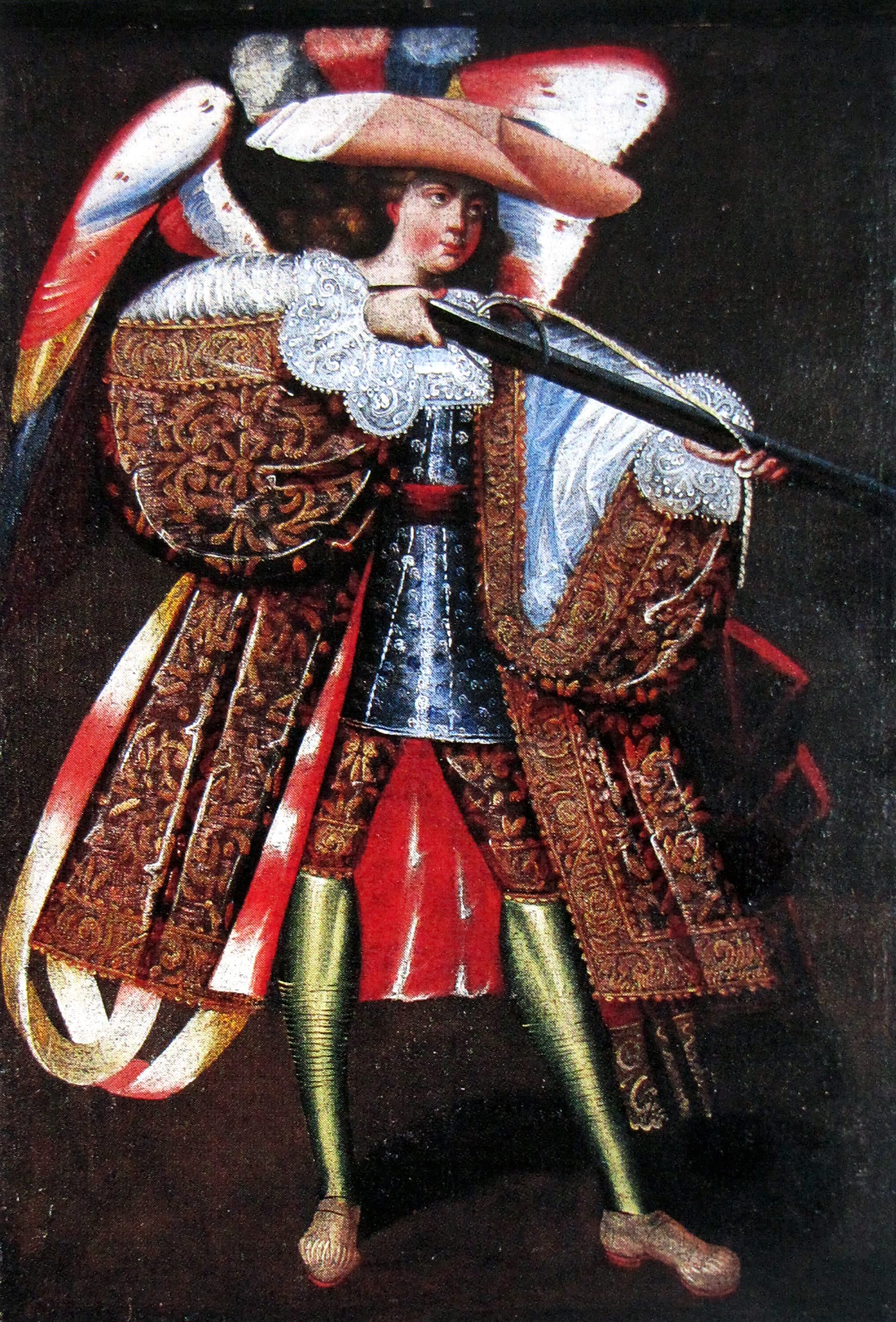
Arquebusier Angel of Casabindo
From the high-Andean church at Casabindo, Argentina — Uquía's sister site for the militia.
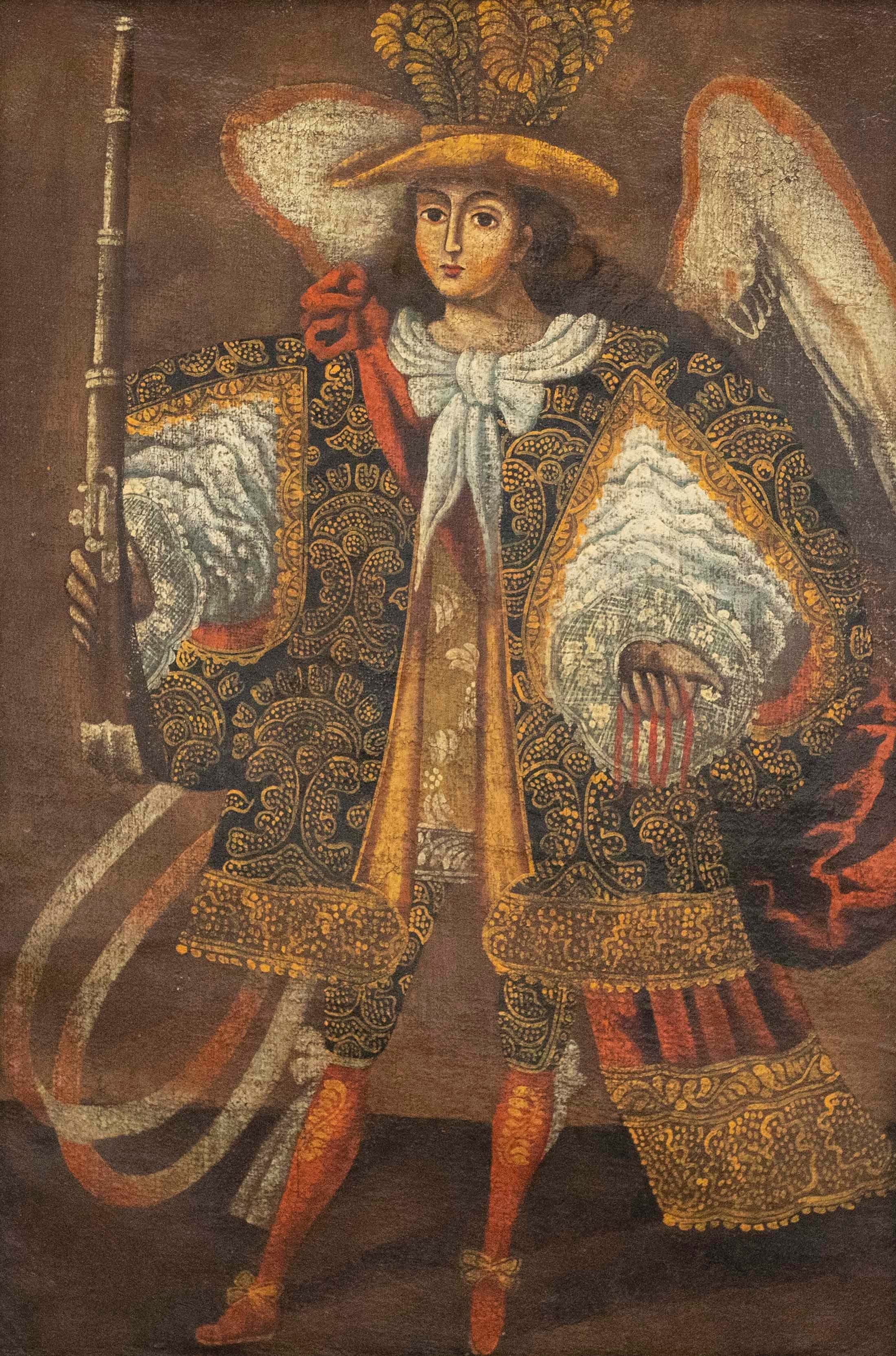
Archangel, Arquebusier
Another unnamed militia member, its inscription lost — still Cusco School work of the first rank.