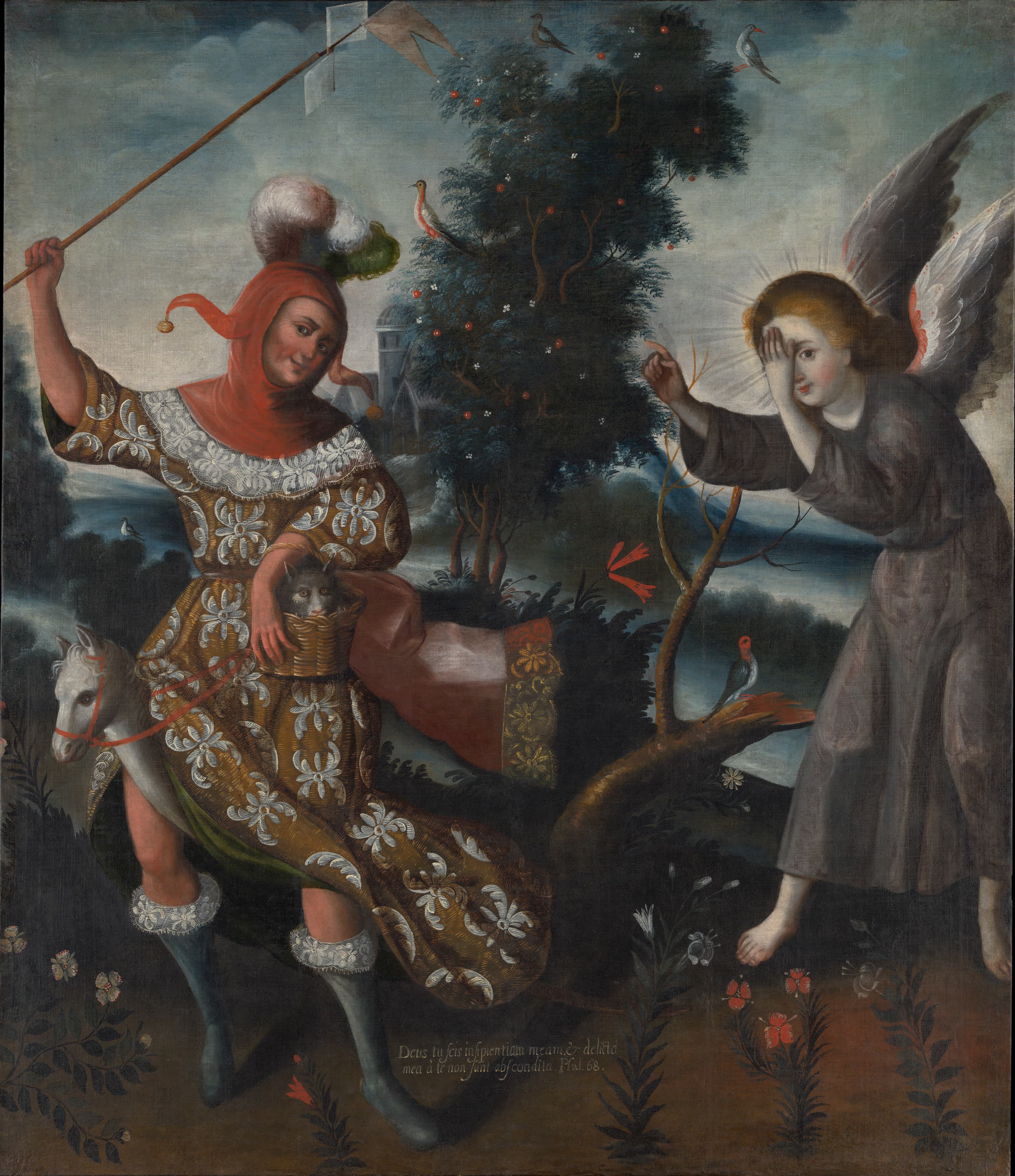
Emblem of Folly
A moral allegory from the private, non-religious side of Cusco School painting.
- Work
- Oil on canvas
- Artist / creator
- Cusco School (anonymous)
- Origin & date
- Peru (Cuzco), 18th century
- Held by
- The Metropolitan Museum of Art, New York — The American Wing (gift of Clifford Ming Teh Li, in honor of James Kung Wei Li and Julie Chu Lu Li, 2018)
Format
The full-resolution scan — yours to print, study, and keep.
Size
$24.00
The story
Not every Cusco School canvas was devotional. Emblem paintings — allegorical images built to be "read" panel by panel, often paired with mottoes, popular across Counter-Reformation Europe as moral teaching tools — were also produced by Andean workshops for private, secular display. This one belongs to that tradition: a symbolic tableau warning against foolishness rather than illustrating scripture or a saint's life.
These emblem pieces are a useful corrective to any flattened idea of the Cusco School as purely a religious-icon factory: the same workshops that gilded a Virgin's mantle also produced witty, moralizing genre pictures for wealthy colonial households, in a visual language closer to European print culture than to church altarpieces.
A window into the room this hung in — not a chapel, but a parlor.
About this reproduction
- • Faithful reproduction of a public-domain work, sourced from The Metropolitan Museum of Art, New York — The American Wing (gift of Clifford Ming Teh Li, in honor of James Kung Wei Li and Julie Chu Lu Li, 2018)’s open-access release.
- • Printed to order on EMA matte art paper, 200gsm. The heirloom frame is gold, under acrylic, with no mount.
- • Color-managed to the source scan.
- • Ships in 5–9 business days; satisfaction guarantee.
From the same collection
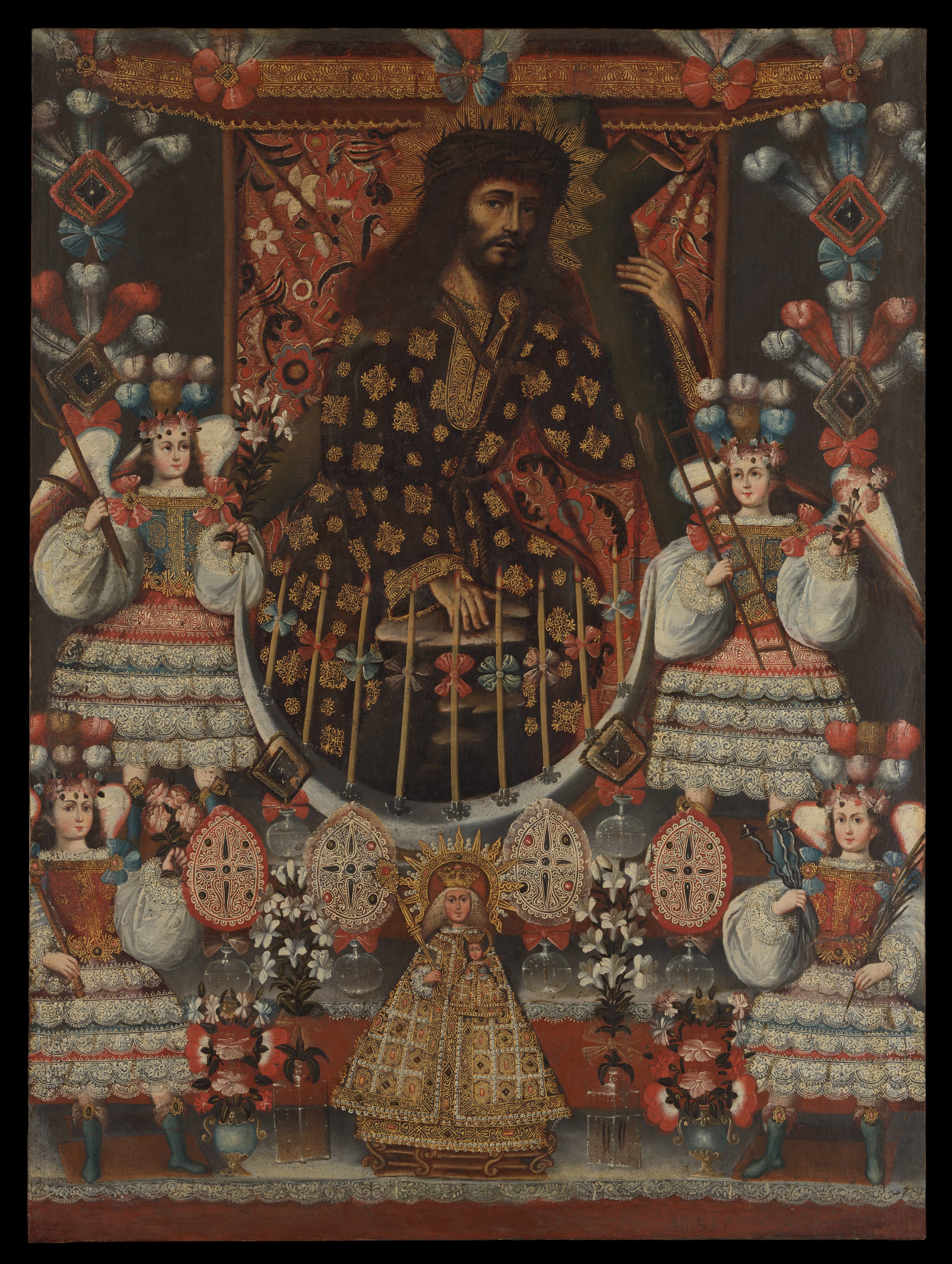
Christ Carrying the Cross, called "The Lord of the Fall"
Christ collapsed under the weight of the cross — one of the tradition's most devastating images.
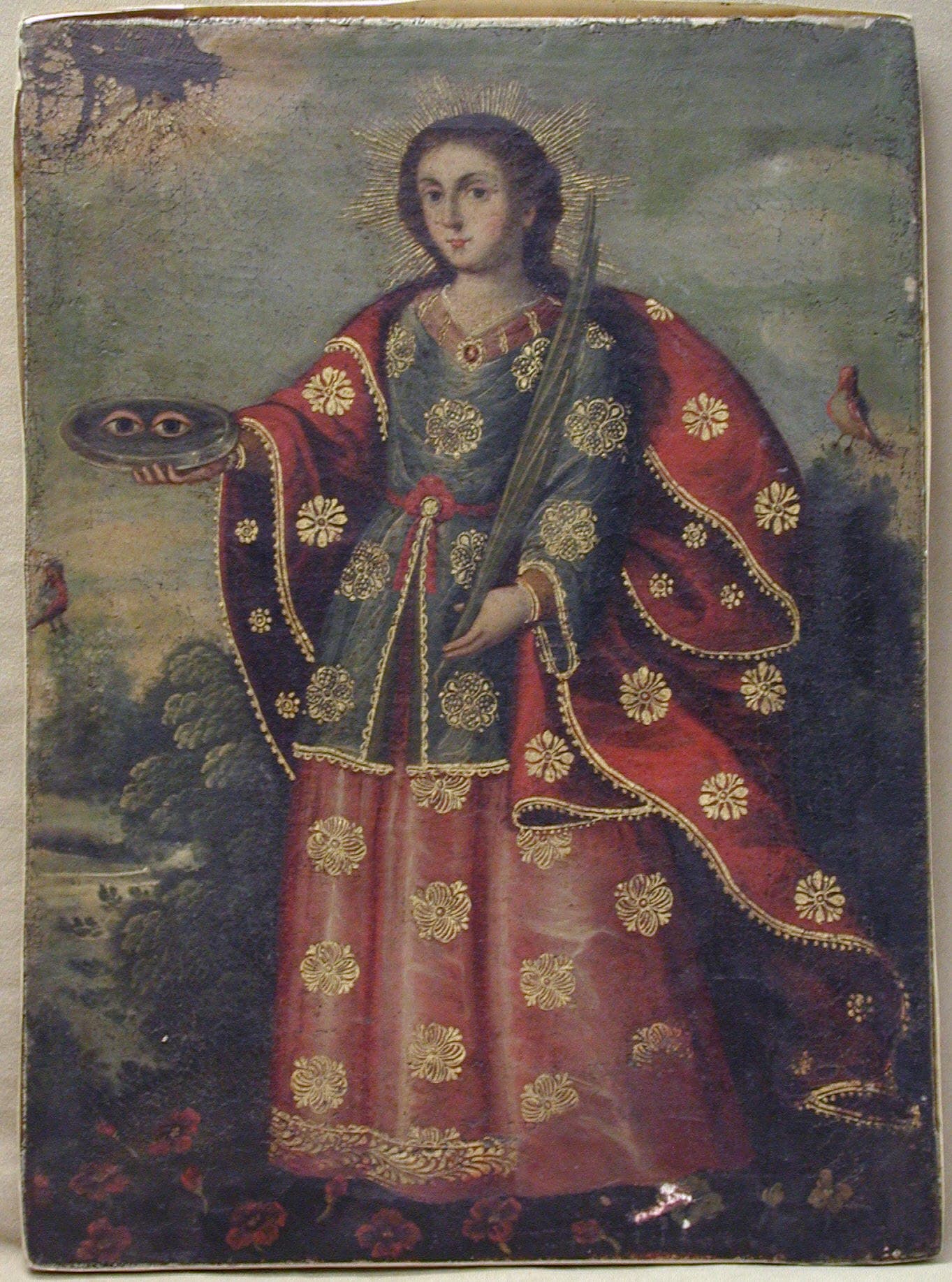
Saint Lucy
The martyr of Syracuse, patron of sight, carrying the eyes taken from her.
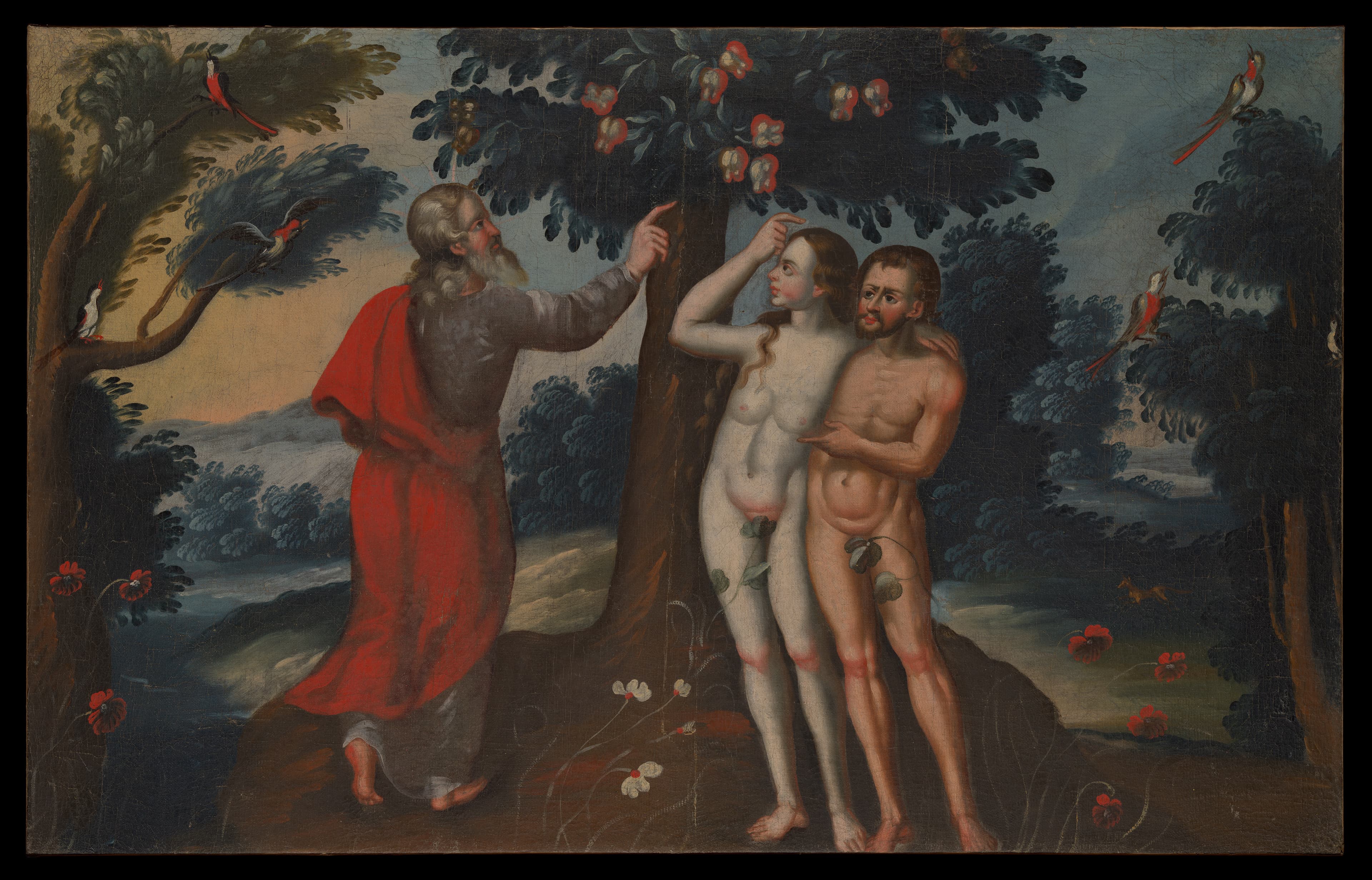
Adam and Eve in Paradise
Genesis, rendered as an Andean garden — the first sin, before the fall.