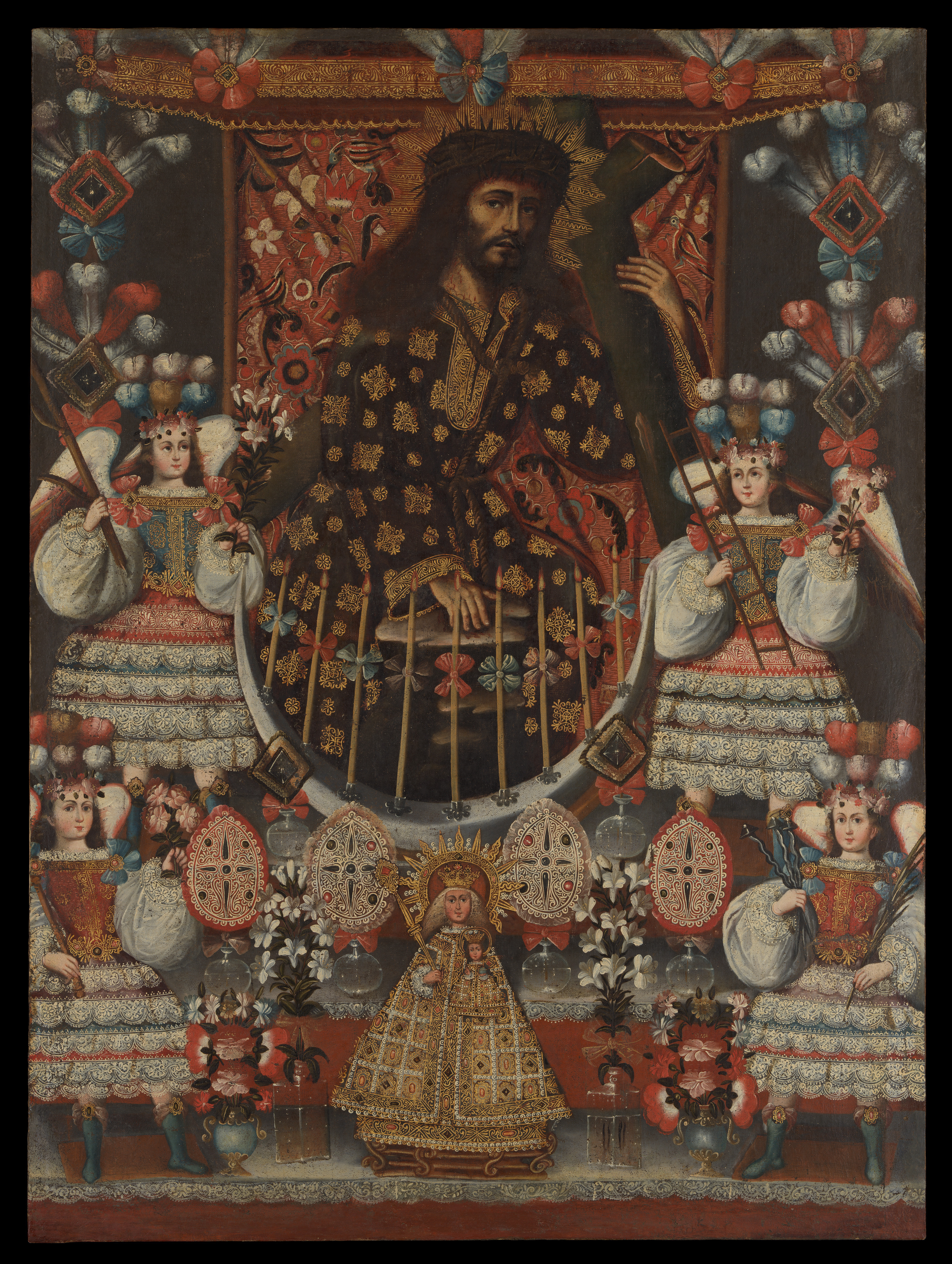
A calendar of processions and patrons
Saints, Corpus Christi & the Colonial World
The devotional life of colonial Peru, painted: the Corpus Christi procession that filled Cusco's plaza once a year, the local saints (Rose of Lima, Martín de Porres) who made sanctity American for the first time, and the private allegories — a fallen Christ, a folly emblem, a Genesis scene — that hung in homes rather than churches. This is the collection's widest lens on the world these paintings actually came from.
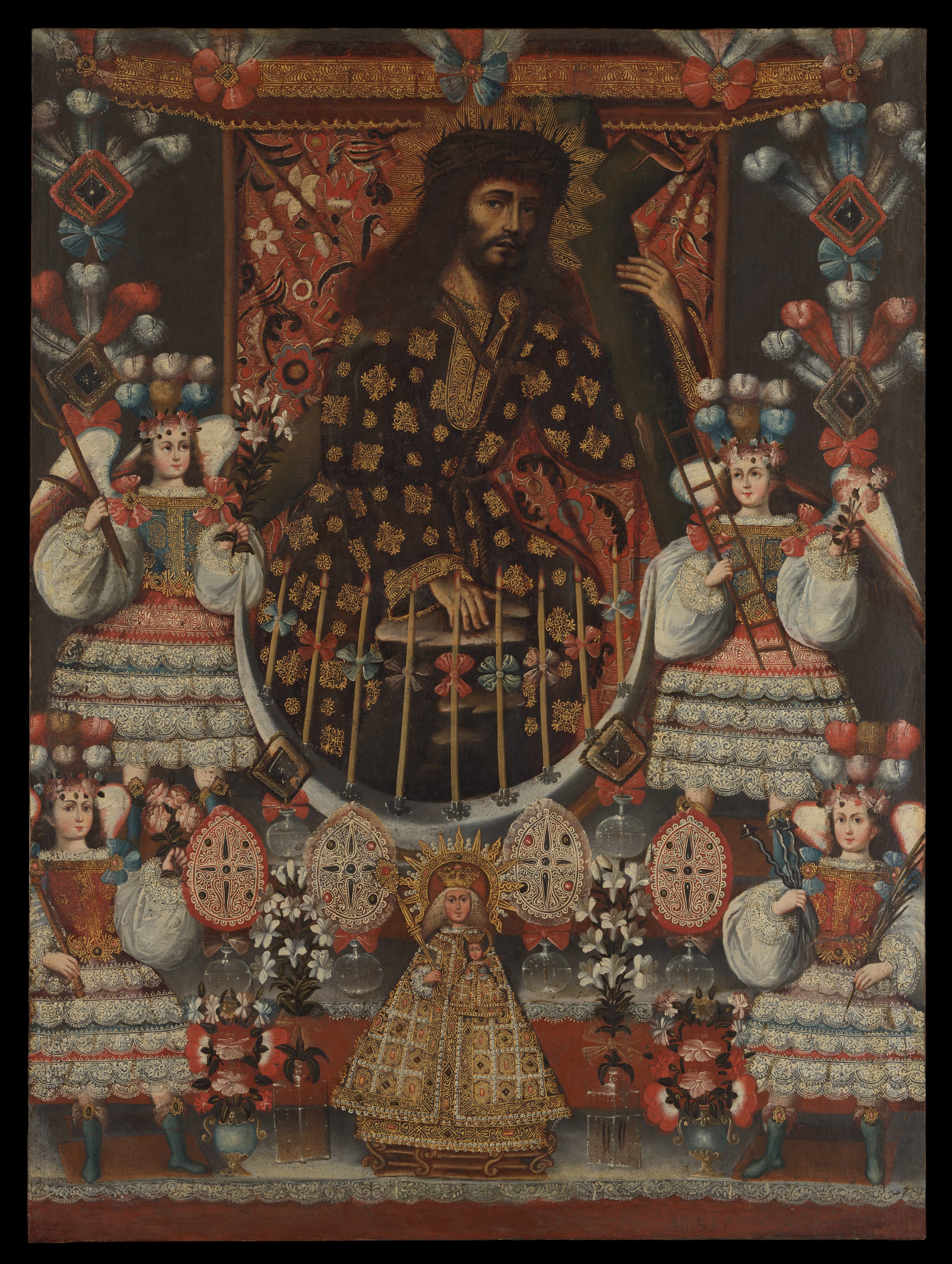
Christ Carrying the Cross, called "The Lord of the Fall"
Christ collapsed under the weight of the cross — one of the tradition's most devastating images.
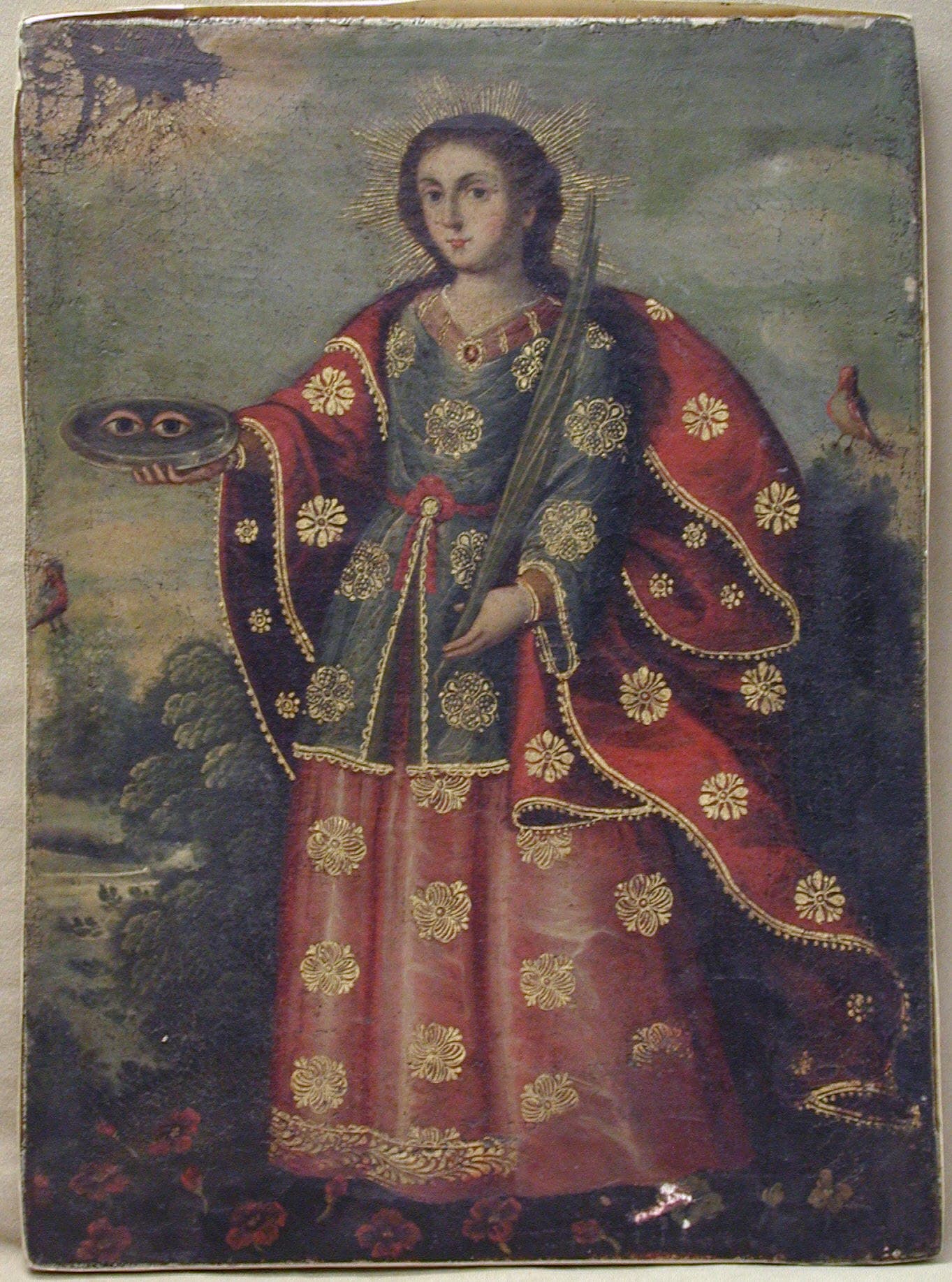
Saint Lucy
The martyr of Syracuse, patron of sight, carrying the eyes taken from her.
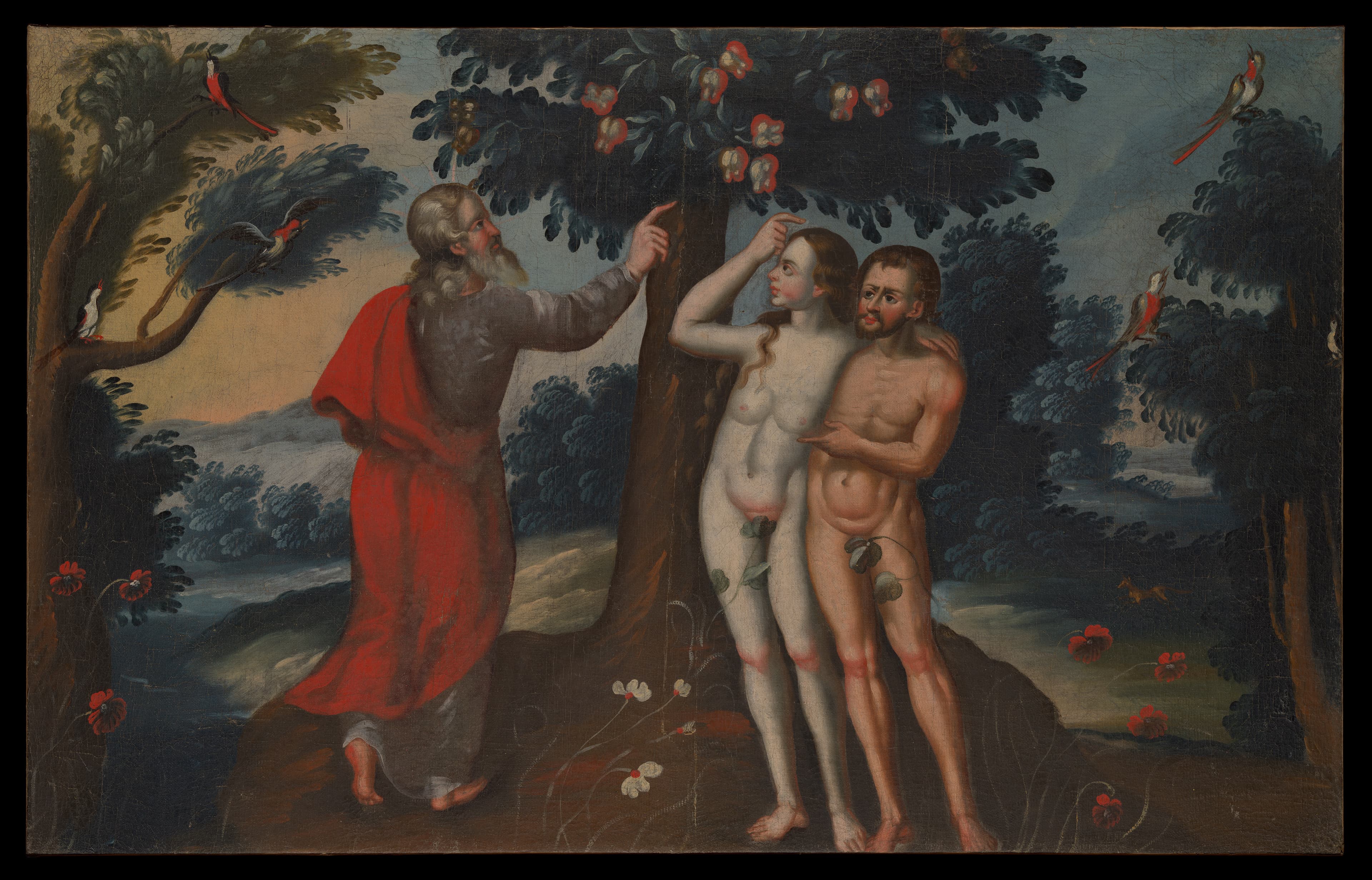
Adam and Eve in Paradise
Genesis, rendered as an Andean garden — the first sin, before the fall.
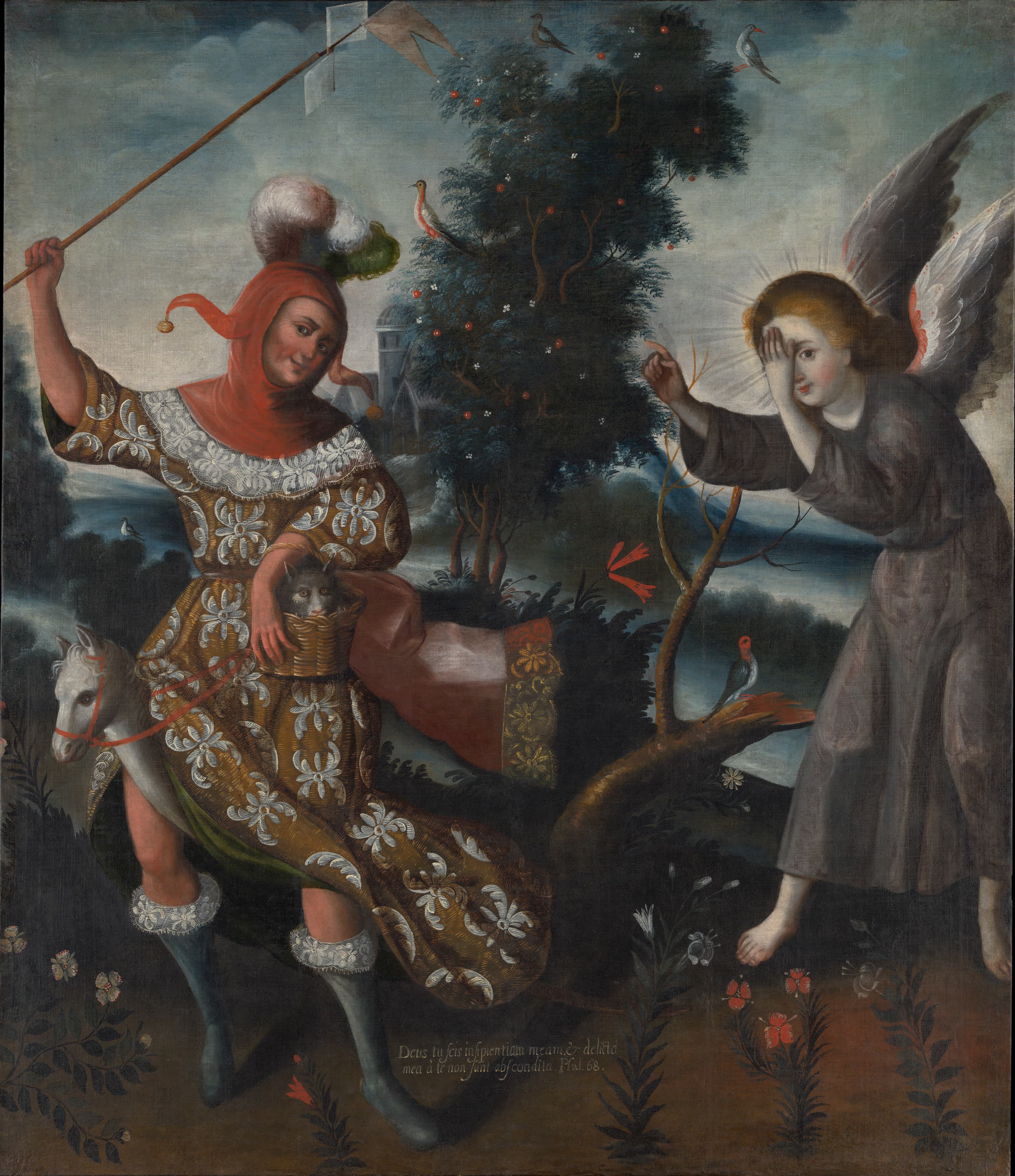
Emblem of Folly
A moral allegory from the private, non-religious side of Cusco School painting.
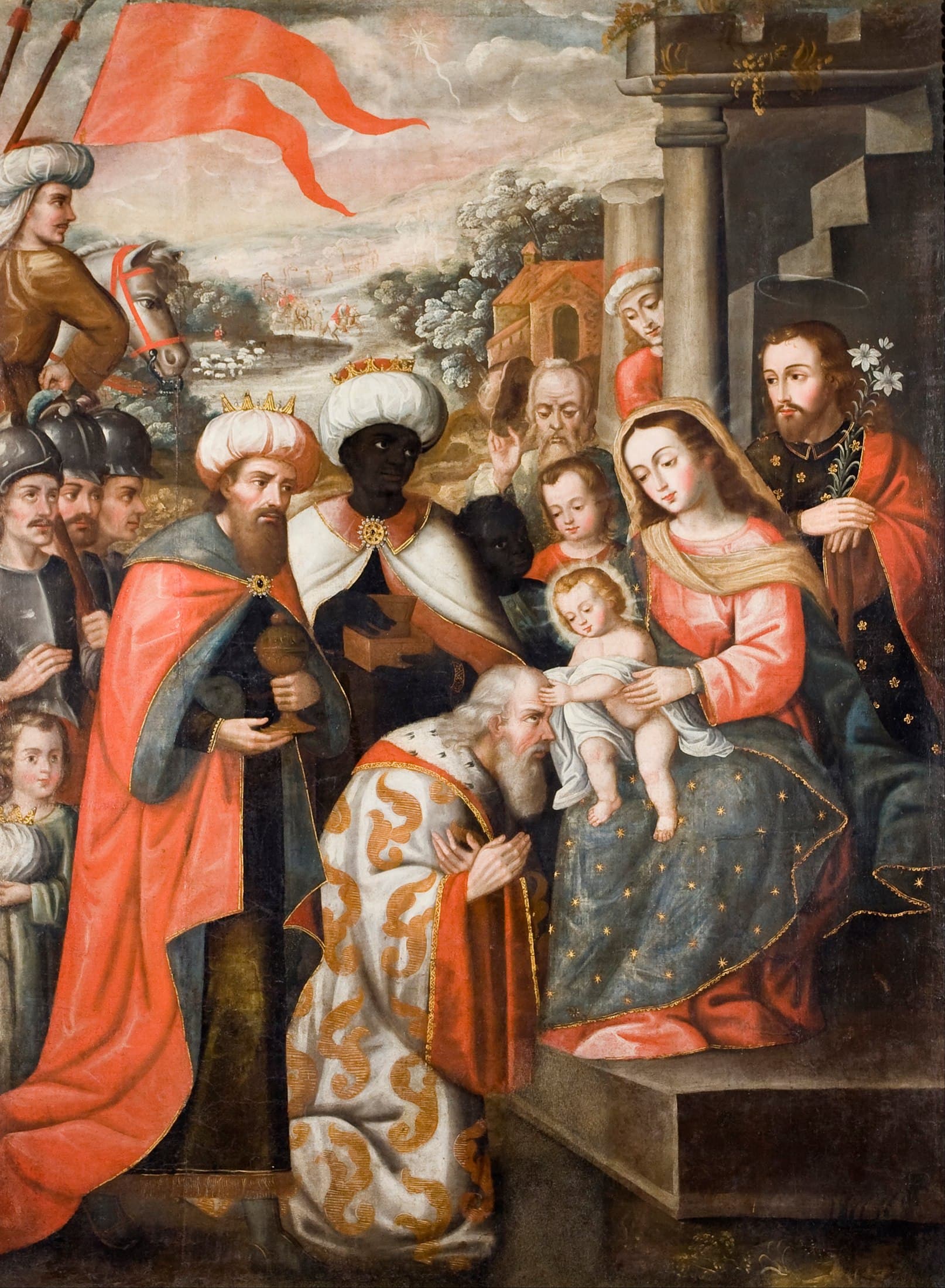
Adoration of the Magi
The three kings, painted with the same devotional intimacy the tradition gave its Marian icons.
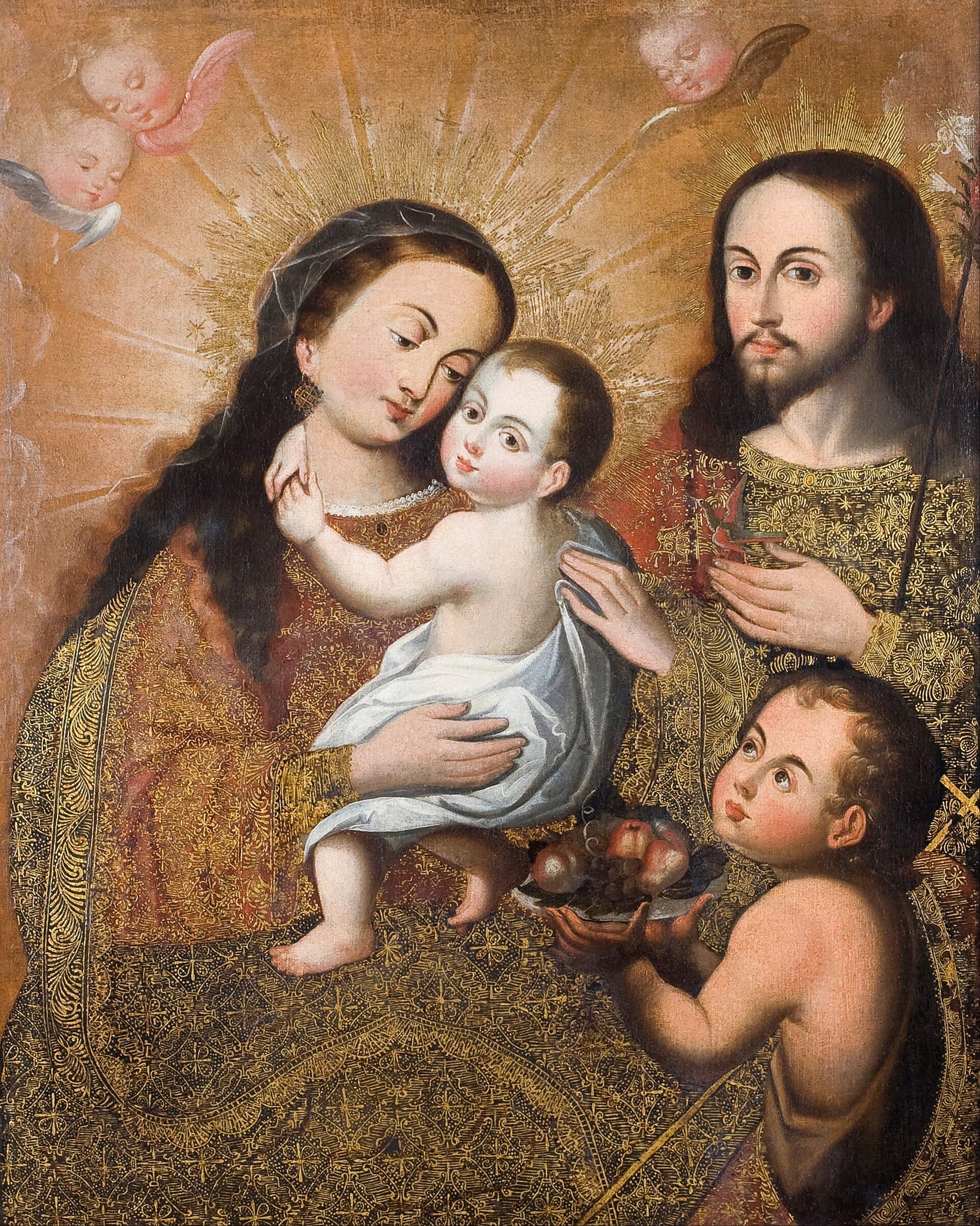
Holy Family with Saint John and a Goldfinch
A domestic Holy Family scene — the goldfinch a quiet, traditional omen of the Passion to come.
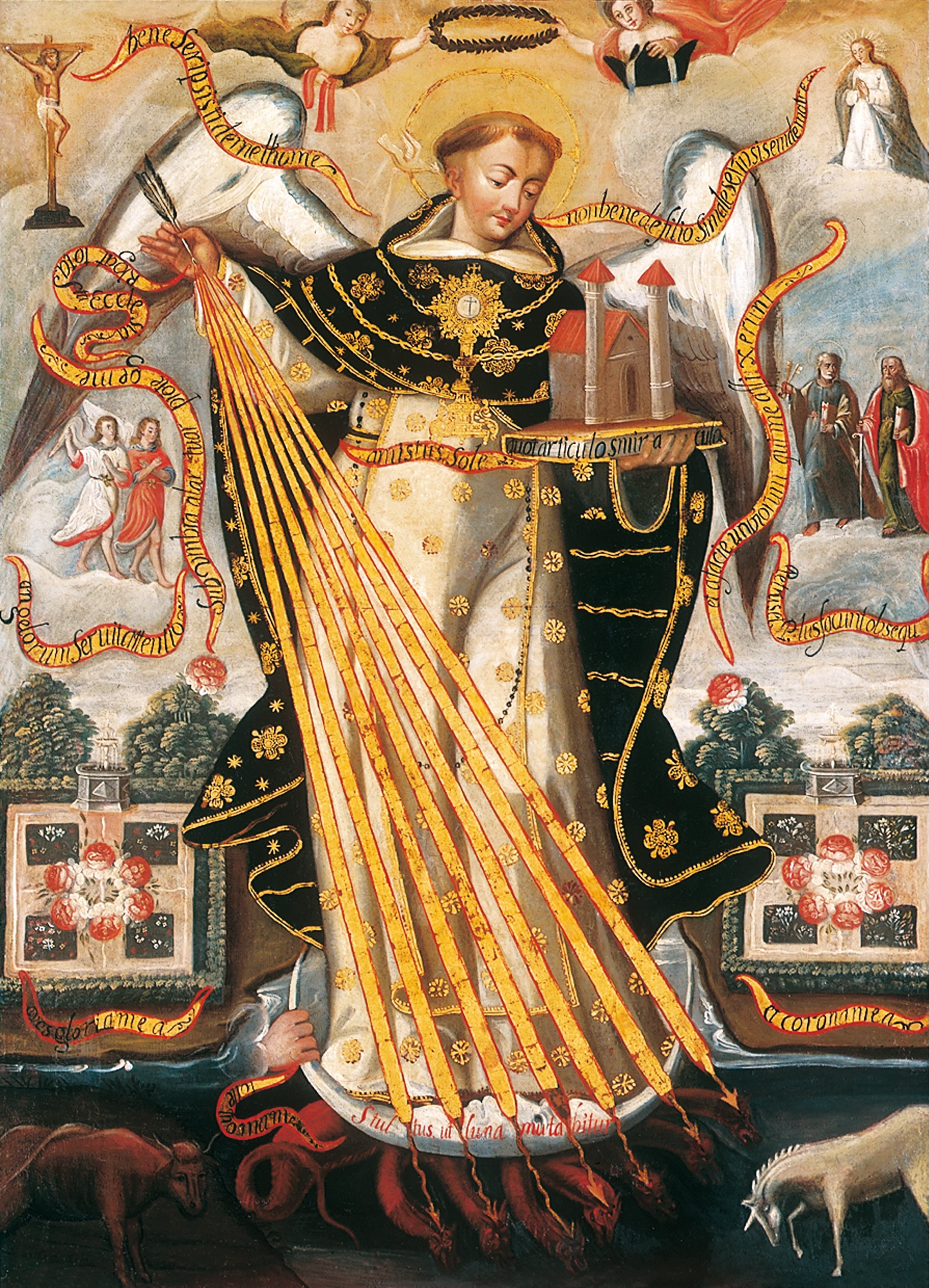
Saint Thomas Aquinas, Protector of the University of Cusco
The Dominican theologian, painted as the patron of the city's own colonial university.
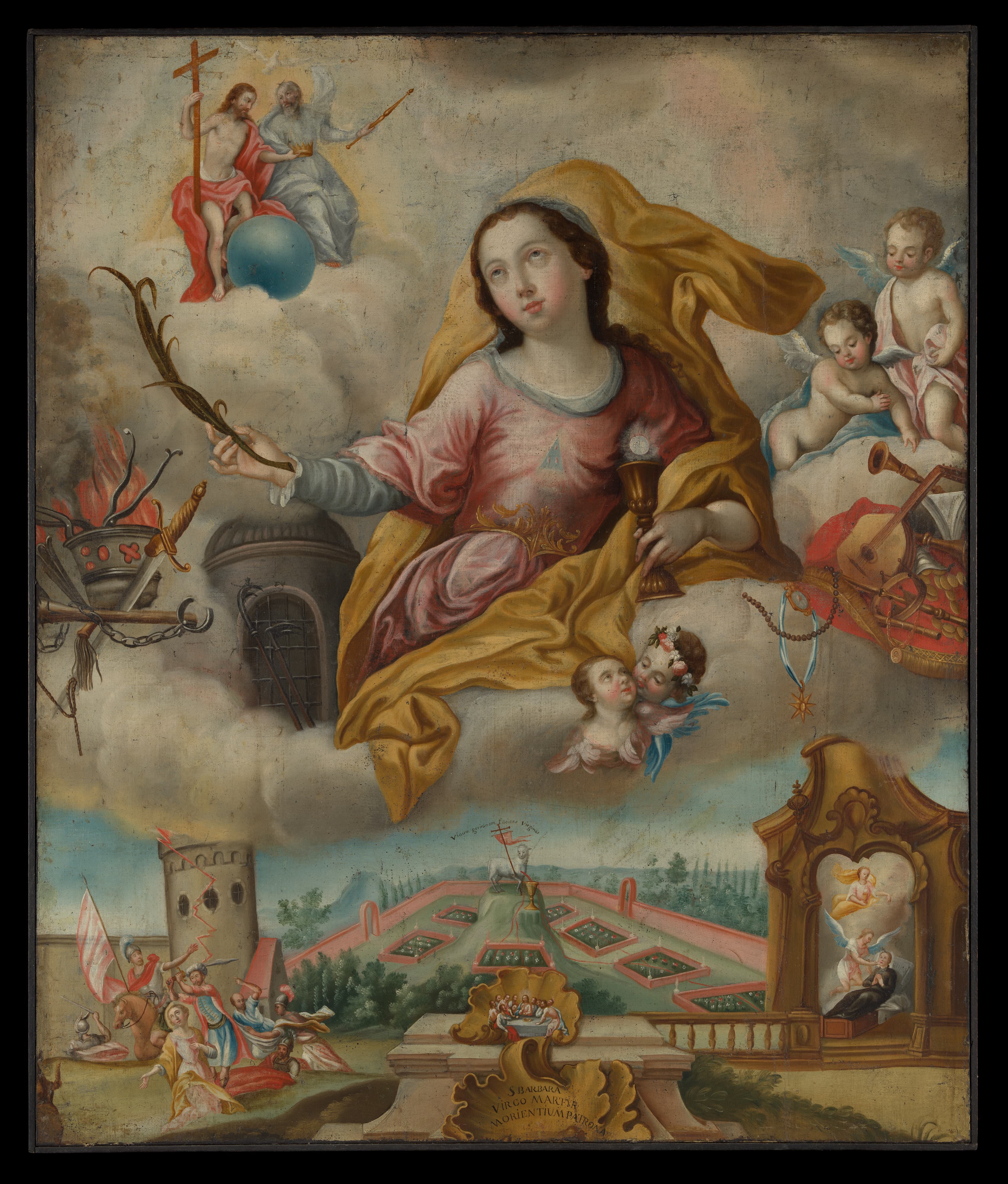
Saint Barbara
The patron saint invoked against sudden death and lightning, painted in Quito rather than Cusco.
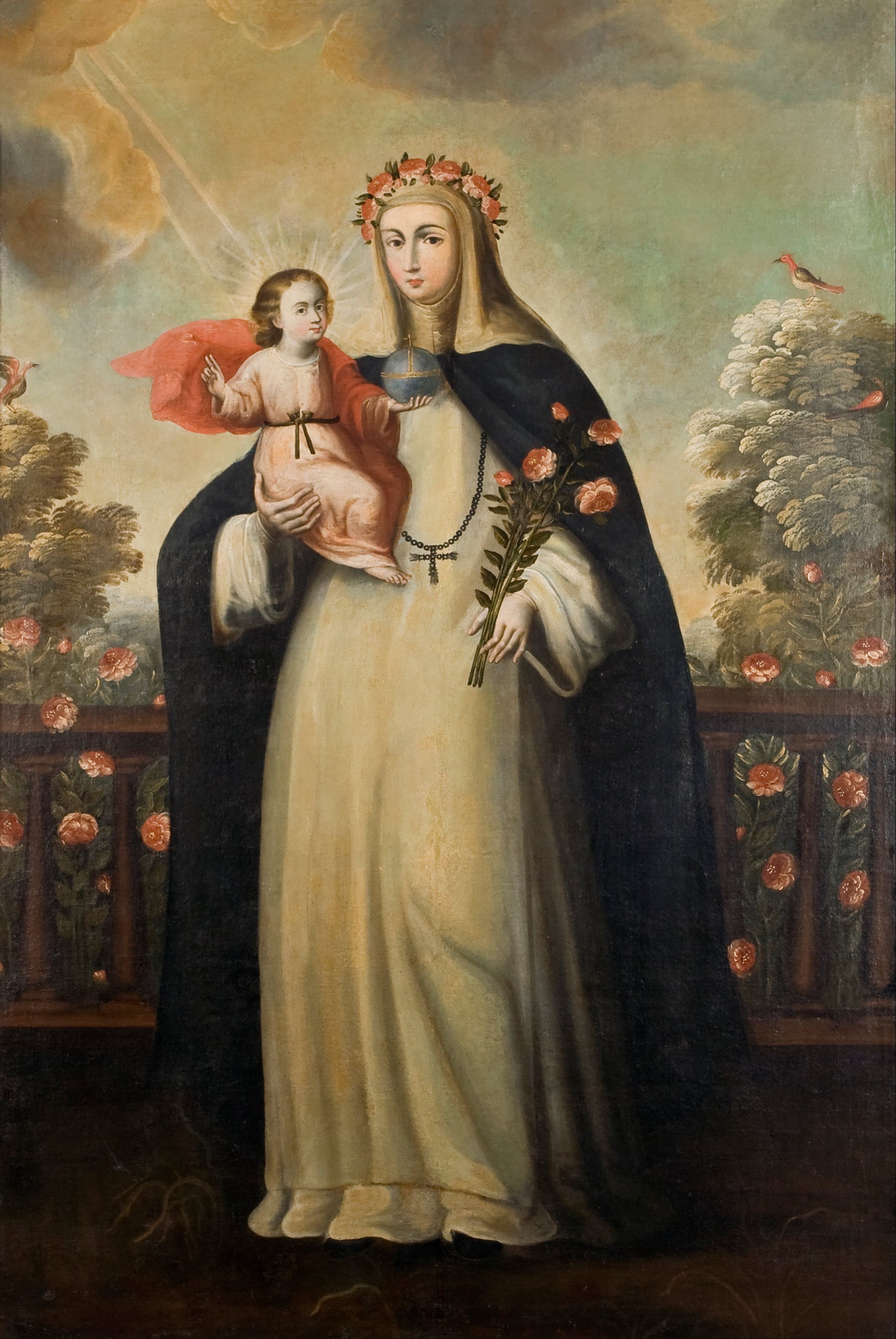
Saint Rose of Lima, with the Christ Child
The Americas' first canonized saint, shown in intimate scale with the infant Christ.
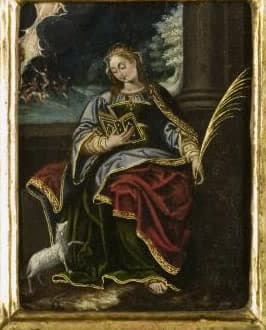
Saint Agnes
A young Roman martyr-saint, painted in colonial Peru and now held by the Hispanic Society of America.